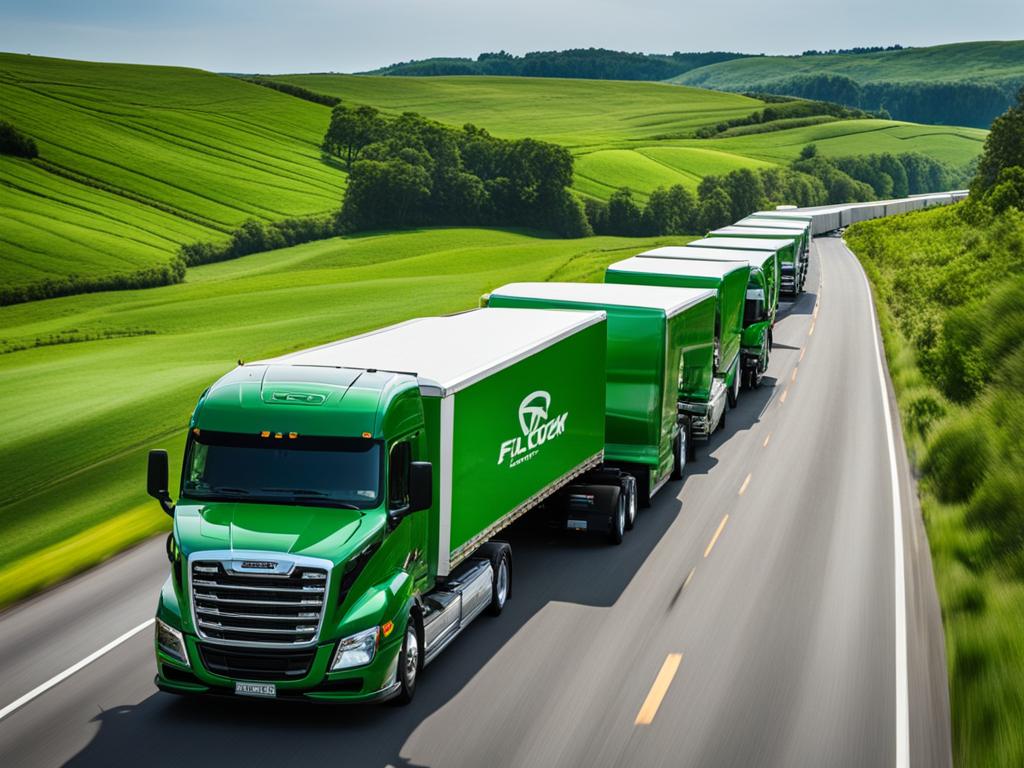
In today’s rapidly changing world of commerce, shipping and transportation solutions are more important than ever. Flock Freight offers innovative freight shipping services that are designed to revolutionize the way goods are transported and managed. With their cutting-edge logistics technology and sustainable practices, Flock Freight is transforming the shipping industry and providing cost-effective solutions for businesses.
When it comes to shipping logistics and freight management, Flock Freight is at the forefront of the industry. Their advanced shipping platform and supply chain solutions utilize the latest shipping technology to optimize freight transportation, reduce costs, and improve efficiency. Whether you need to ship small parcels or large shipments, Flock Freight has the expertise and resources to meet your freight optimization needs.
With Flock Freight’s state-of-the-art shipping software, businesses can easily manage their shipping operations and track their shipments in real-time. This innovative software streamlines the shipping process, eliminates unnecessary delays, and ensures that your goods are delivered on time and in pristine condition.
By choosing Flock Freight as your shipping partner, you can revolutionize your shipping operations and stay ahead of the competition. Experience the benefits of their advanced shipping solutions and take your business to new heights.
Key Takeaways:
- Flock Freight offers innovative shipping solutions for businesses
- Their logistics technology optimizes freight transportation and reduces costs
- Flock Freight’s shipping software provides real-time tracking and streamlined operations
- Choose Flock Freight to revolutionize your shipping processes and stay ahead of the competition
- Experience the benefits of advanced shipping solutions for your business
Understanding the History of Freight Industry Inefficiencies
The freight industry has long been plagued by inefficiencies that result in delays, damages, increased costs, and underutilized capacity. Traditional shipping options, such as less than truckload (LTL) and full truckload (FTL), have inherent limitations that contribute to these inefficiencies and hamper the industry’s overall performance.
According to Flock’s 2023 freight inefficiencies report, several factors contribute to the persistent challenges faced by the industry. For instance, strict On-Time In Full (OTIF) regulations aimed at improving delivery performance have placed additional pressure on carriers and shippers. However, these regulations often lead to unintended consequences, such as rushed loading and increased risk of damages, which erode efficiency and reliability.
Another major issue is the prevalence of partially empty truckloads. This occurs when shipments do not fully utilize the available space in a truck, leading to wasted capacity, higher costs, and increased carbon emissions. These underutilized truckloads contribute to the industry’s carbon footprint and environmental impact.
Overall, the historical inefficiencies in the freight industry have hindered businesses’ ability to meet customer expectations, maximize profitability, and minimize their environmental footprint.
The Impact of Freight Industry Inefficiencies
The consequences of these inefficiencies are far-reaching and affect various stakeholders within the freight ecosystem:
- Delays: Inefficient logistics processes result in longer transit times and unpredictable delivery schedules, causing disruptions in supply chains and dissatisfied customers.
- Damage: Insufficient consolidation and improper handling can lead to damaged goods, resulting in financial losses for both shippers and carriers.
- Increased Costs: Inefficiencies drive up transportation costs, with businesses bearing the brunt of expenses related to underutilized capacity, fuel, and labor.
Addressing these inefficiencies is crucial for the freight industry to achieve sustainable growth, enhance customer satisfaction, and reduce its environmental impact. By embracing innovative solutions, such as Flock Freight’s shared truckload shipping model, businesses can overcome these challenges and unlock new opportunities for success.
| Challenges | Consequences |
|---|---|
| Delays | Dissatisfied customers Supply chain disruptions |
| Damage | Financial losses Reputational damage |
| Increased Costs | Higher transportation expenses Underutilized capacity costs |
The Sustainable and Profitable Alternative: Shared Truckload Shipping
Flock Freight challenges the belief that sustainability and profitability are mutually exclusive by offering shared truckload shipping as a more sustainable and profitable alternative. Unlike traditional freight providers, Flock leverages patented technology to pool shipments from multiple shippers, maximizing truck capacity and ensuring the most efficient routes.
This shared truckload model reduces carbon emissions by up to 40% without compromising service quality. By consolidating multiple shipments into a single truckload, Flock Freight significantly reduces the number of trucks on the road, resulting in fewer carbon emissions and a reduced environmental impact.
Not only does shared truckload shipping benefit the environment, but it also offers cost savings for shippers. By sharing the cost of transportation with other shippers, companies can achieve significant cost reductions compared to traditional shipping methods. The pooling of freight also leads to improved operational efficiency and better resource allocation, resulting in increased profitability for both shippers and carriers.
The Role of Freight Technology in Revolutionizing the Industry
At the core of Flock Freight’s revolutionary approach is cutting-edge freight technology. By utilizing combinatorial optimization algorithms and machine learning, Flock connects shippers with similar routes to carriers already traveling in those directions. This maximizes truck utilization and provides the service level of full truckload shipping at a lower cost. Flock’s shift from outdated shipping modes to a modern digital platform streamlines operations and eliminates unnecessary constraints, benefiting both customers and carriers.
With the advancement of freight technology, Flock Freight revolutionizes the industry by leveraging combinatorial optimization algorithms and machine learning to optimize the transportation process. By utilizing these advanced algorithms, Flock Freight effectively matches shippers’ freight with carriers already traveling in similar routes. This optimization leads to increased truck utilization, reducing the number of partially empty trucks on the road and minimizing wasted capacity.
The innovative use of machine learning in Flock Freight’s freight technology enables the platform to continuously learn and adapt to evolving supply chain dynamics. By identifying patterns and trends in shipping data, Flock Freight’s technology can make accurate predictions and recommendations to optimize the entire transportation process.
Moreover, Flock Freight’s digital platform plays a crucial role in streamlining operations. Through the digital platform, shippers can easily request shipments, track their progress in real-time, and manage all necessary documentation. Carriers, on the other hand, gain access to a seamless interface that simplifies load planning, ensures efficient communication, and facilitates prompt payment processes.
By eliminating unnecessary constraints and leveraging the power of freight technology, Flock Freight creates a more efficient and optimized shipping experience. Customers benefit from cost savings, improved service levels, and reduced environmental impact, while carriers enjoy increased earnings and streamlined operations.
By embracing cutting-edge freight technology, Flock Freight sets a new standard for the industry, disrupting traditional shipping models and establishing a more sustainable and profitable approach to freight transportation.
| Benefits of Freight Technology: |
|---|
| Maximizes truck utilization |
| Reduces empty truckloads |
| Improves service level |
| Streamlines operations |
| Eliminates unnecessary constraints |
Embracing Online Freight Services for Simplified Logistics
Online freight services have revolutionized the shipping industry by providing shippers and carriers with web-based solutions that simplify their logistics processes. These services offer numerous benefits for both shippers and carriers, streamlining operations and improving efficiency.
For Shippers:
Shippers gain access to a wide network of carriers through online freight services, expanding their options for transportation. With a vast pool of carriers to choose from, shippers can easily compare rates and select the most cost-effective solution for their shipments, leading to significant cost savings. Real-time tracking of shipments allows shippers to monitor the progress of their deliveries, ensuring transparency and peace of mind. Additionally, automated paperwork generation reduces administrative burden and saves time, enabling shippers to focus on other critical aspects of their business.
For Carriers:
Online freight services provide carriers with increased access to shipment opportunities, allowing them to fill their trucks more efficiently. This results in faster and more efficient payments, improving cash flow for carriers. Online platforms also offer improved load planning, enabling carriers to optimize their routes and maximize their operational efficiency. Streamlined communication between shippers and carriers further enhances collaboration, leading to smoother operations and better customer satisfaction.
Overall, the adoption of online freight services has brought about significant advancements in the logistics industry. Through web-based solutions, shippers and carriers can leverage real-time tracking, automated paperwork, and enhanced communication to make their shipping processes more efficient and cost-effective. This digital transformation has revolutionized logistics, paving the way for a more streamlined and sustainable future.

Stay tuned for the next section, where we will explore how online freight services work for shippers and carriers, delving into the intricacies of online freight booking and the technologies that power these platforms.
How Online Freight Services Work for Shippers and Carriers
Online freight booking services offer a streamlined and efficient solution for shippers and carriers to manage their shipping needs. With just a few simple steps, shippers can easily book and track their shipments while carriers can find new opportunities and manage their operations seamlessly.
1. Shipment Request
Shippers begin by creating a shipment request on the online freight platform. They provide essential details such as the origin and destination of the shipment, the type of goods being transported, and any special requirements.
2. Carrier Selection
Once the shipment request is created, shippers can browse through a diverse network of carriers available on the online freight platform. They can compare rates, carrier reviews, and service levels to select the most suitable carrier for their shipment. This ensures that the shipment is in safe hands and will reach the destination on time and in optimal condition.
3. Shipment Tracking
After selecting a carrier, shippers can track their shipments in real time through the online platform. They gain visibility into the current location of their goods, estimated arrival times, and any updates or delays that may occur during transit. This transparency ensures peace of mind and allows shippers to proactively manage their supply chain.
4. Shipment Payment
Once the shipment reaches its destination, shippers can conveniently make payment through the online platform. Online freight services offer secure payment gateways, ensuring a smooth and hassle-free transaction process. Shippers can choose from various payment options, such as credit cards, electronic funds transfer, or digital wallets, depending on their preferences.
Technologies Powering Online Freight Services
Online freight platforms leverage advanced technologies to streamline operations and enhance communication between shippers and carriers. Some of the key technologies used include:
- Transportation Management Systems (TMS) Platforms: TMS platforms enable efficient management of freight operations, providing end-to-end visibility and control over shipments. These platforms automate tasks such as route optimization, load planning, and documentation, saving time and improving efficiency.
- Electronic Data Interchange (EDI): EDI allows for the electronic exchange of shipment-related data between shippers and carriers. It eliminates the need for manual paperwork, reduces errors, and speeds up communication, leading to faster and more accurate transactions.
- Application Programming Interfaces (APIs): APIs facilitate seamless integration between different systems and applications, enabling real-time data sharing and communication between shippers, carriers, and other stakeholders. This integration enhances visibility, efficiency, and collaboration throughout the supply chain.
- Machine Learning and Artificial Intelligence (AI): Machine learning and AI algorithms analyze vast amounts of data to optimize routing decisions, predict shipment delays, and recommend the most cost-effective solutions. These technologies enable continuous improvement and smarter decision-making within the online freight ecosystem.
Through the effective utilization of these technologies, online freight services offer a user-friendly and efficient platform for shippers and carriers to thrive in the dynamic world of logistics.
The Role of Freight Technology in Online Freight Services
Freight technology plays a crucial role in revolutionizing online freight services, enabling shippers and carriers to embrace more efficient and collaborative business practices. Leveraging a combination of transportation management systems, electronic data interchange, application programming interfaces, machine learning, and artificial intelligence, logistics technology empowers businesses to make data-driven decisions, optimize operations, improve communication, and drive innovation within their organizations.
Transportation Management Systems (TMS)
Transportation management systems (TMS) are integral to online freight services, providing a centralized platform for shippers and carriers to manage their shipping operations. TMS streamlines freight processes by automating tasks such as order management, carrier selection, and load optimization. With real-time visibility into shipments, shippers can make informed decisions and proactively address any potential issues. TMS also facilitates seamless communication between shippers and carriers, enhancing collaboration and ensuring a smooth shipping experience.
Electronic Data Interchange (EDI)
Electronic data interchange (EDI) enables the seamless exchange of shipping-related information between different stakeholders in the supply chain. By standardizing data formats and automating data transfer, EDI eliminates manual processes, reduces errors, and enhances efficiency. Shippers and carriers can exchange critical information such as shipment details, invoices, and delivery confirmations electronically, improving accuracy and speeding up communication.
Application Programming Interfaces (APIs)
Application programming interfaces (APIs) play a vital role in connecting various systems and facilitating the exchange of data between shippers, carriers, and other stakeholders. APIs enable seamless integration between different software platforms, allowing for the efficient transfer of information and streamlining of processes. For example, APIs can be used to connect a shipper’s TMS with a carrier’s system, enabling real-time tracking of shipments, automatic updates, and improved visibility.
Machine Learning and Artificial Intelligence (AI)
Machine learning and artificial intelligence (AI) technologies are transforming the freight industry by enabling intelligent decision-making, automated processes, and predictive analytics. Machine learning algorithms can analyze vast amounts of historical shipping data to identify patterns and optimize routing and load allocation. AI-powered systems can also provide real-time recommendations for carriers and shippers to improve operational efficiency and reduce costs. By harnessing the power of machine learning and AI, businesses can enhance their competitiveness and deliver superior service to customers.
Benefits of Logistics Technology
Implementing freight technology solutions offers numerous benefits to shippers and carriers:
- Optimized Operations: Logistics technology enables shippers and carriers to optimize their operations by automating tasks, improving efficiency, and maximizing utilization of resources.
- Improved Communication: With seamless data exchange and enhanced visibility, logistics technology fosters better communication and collaboration between shippers and carriers, leading to smoother operations.
- Data-Driven Decisions: By harnessing the power of data analytics and predictive modeling, logistics technology empowers businesses to make informed decisions based on accurate insights and forecasts.
Overall, freight technology accelerates the digital transformation of the shipping industry, enabling businesses to improve efficiency, reduce costs, and provide exceptional service to their customers.

The Influence of Flock Freight’s Success on Collaborative Shipping Models
Flock Freight’s proven success in implementing collaborative shipping models has inspired other players in the logistics industry to embrace this innovative approach. By forming collaborative logistics partnerships and adopting shared truckload strategies, businesses can optimize efficiency, reduce costs, and enhance sustainability practices.
The adoption of collaborative shipping models, such as shared truckload, is disrupting the traditional shipping industry, driving industry-wide adoption, and transforming the way goods are transported. Through shared truckload, multiple shippers can consolidate their shipments, maximizing truck capacity and reducing empty miles. This disruptive shipping model not only leads to optimized efficiency and cost savings but also has a significant positive impact on the environment by minimizing carbon emissions.
Flock Freight’s achievements serve as a catalyst for positive change within the logistics industry. By showcasing the benefits of collaborative logistics partnerships and shared truckload shipping, Flock Freight has paved the way for industry-wide adoption. As more businesses embrace this approach, they can unlock optimized efficiency, realize substantial cost savings, strengthen industry partnerships, and contribute to a more sustainable future.
FAQ
What does Flock Freight offer?
Flock Freight offers shipping solutions and transportation services, utilizing innovative logistics technology to optimize freight management and provide sustainable and profitable alternatives.
What are some of the inefficiencies in the freight industry?
Inefficiencies in the freight industry include loss, damage, delays, and increased costs. Traditional shipping options such as less than truckload and full truckload often lead to underutilized capacity and constraints.
How does shared truckload shipping address these inefficiencies?
Shared truckload shipping offered by Flock Freight maximizes truck capacity and ensures efficient routes. By pooling shipments from multiple shippers, Flock Freight reduces carbon emissions by up to 40% and provides cost savings without compromising service quality.
How does Flock Freight utilize freight technology?
Flock Freight utilizes combinatorial optimization algorithms and machine learning to connect shippers with similar routes and carriers already traveling in those directions. This maximizes truck utilization and provides the service level of full truckload shipping at a lower cost.
What are the benefits of using online freight services?
Online freight services simplify logistics processes, providing shippers with access to a wide network of carriers, real-time tracking of shipments, automated paperwork generation, and cost savings through competitive pricing options.
How do online freight services work for shippers and carriers?
Shippers can create a shipment request, select a carrier, track the shipment in real time, and make payment through the online platform. Technologies such as transportation management systems, electronic data interchange, and machine learning streamline processes and enhance communication between shippers and carriers.
What role does freight technology play in online freight services?
Freight technology, including transportation management systems, electronic data interchange, and machine learning, enables data-driven decisions, optimized operations, improved communication, and enhanced collaboration between shippers and carriers.
How has Flock Freight influenced collaborative shipping models?
Flock Freight’s success in implementing shared truckload shipping has inspired other industry players to embrace this innovative approach. Collaborative logistics partnerships and industry-wide adoption of pooling rates and shared truckload strategies have revolutionized the industry, optimizing efficiency, reducing costs, and improving sustainability practices.


Leave a Reply