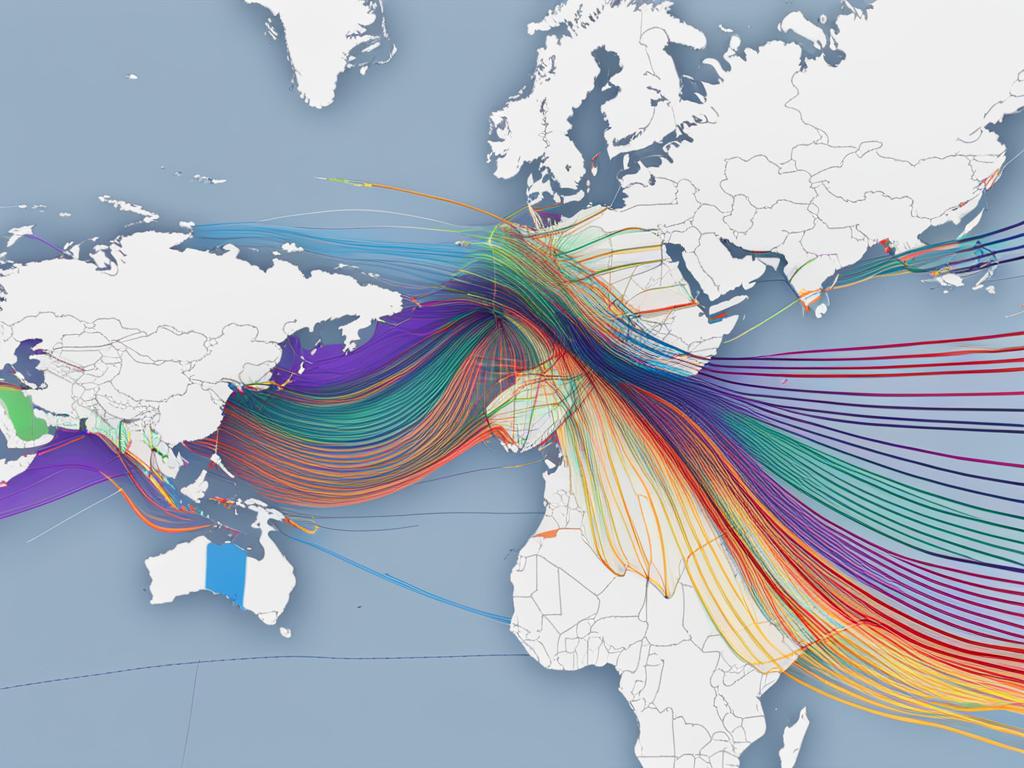
Proper freight management is crucial for businesses to thrive and remain competitive in today’s market. One key aspect of efficient freight management is optimizing shipping routes. By maximizing the efficiency of transportation routes, businesses can minimize costs, reduce delivery times, and improve overall customer satisfaction.
Flock Freight is a leading player in the logistics industry, offering innovative solutions for shipping routes optimization. Their advanced algorithms and data-driven approach enable businesses to streamline their freight logistics, resulting in optimized shipping routes that deliver significant benefits. With Flock Freight, businesses can expect increased efficiency, reduced costs, and enhanced sustainability in their logistics operations.
Key Takeaways:
- Flock Freight specializes in optimizing shipping routes through their advanced algorithms and data-driven approach.
- Optimized shipping routes can lead to reduced costs, improved delivery times, and enhanced customer satisfaction.
- Flock Freight’s solutions offer increased efficiency, cost savings, and sustainability in freight logistics operations.
- Automated routing can significantly streamline freight management and optimize shipping routes.
- Collaboration and technology play a vital role in optimizing shipping routes and achieving efficient logistics operations.
Understanding Freight and Logistics
Freight logistics is the process of managing the movement of large or heavy shipments from one location to another. This involves utilizing various modes of transportation, such as trucks, rail, air, or ocean, to ensure the efficient and timely delivery of goods. Logistics, on the other hand, encompasses the overall management of resources, including transportation, inventory, and warehousing, to meet the demands of a business.
Freight, in the context of logistics, refers to shipments that exceed certain size dimensions or weigh over 150 pounds. These shipments require specialized handling and coordination to ensure their safe and prompt delivery.
Understanding the terms freight and logistics is essential for businesses involved in freight transportation and management. By having a solid grasp of these concepts, companies can make informed decisions regarding the most suitable shipping methods and modes of transport for their specific needs.
Let’s take a closer look at the various modes of transportation commonly used in freight logistics:
- Truck: Trucks are a popular choice for domestic freight transportation due to their flexibility and widespread availability. They offer door-to-door delivery and can accommodate a wide range of shipment sizes.
- Rail: Rail transport is ideal for long-distance shipments, especially those involving bulk goods or heavy loads. It provides a cost-effective option for transporting goods across continents.
- Air: Air freight is the fastest mode of transportation, making it suitable for time-sensitive or perishable shipments. However, it tends to be more expensive compared to other options.
- Ocean: Ocean freight is commonly used for international shipments, particularly those of large volumes. It is a cost-effective option but usually requires longer transit times.
Each mode of transportation has its advantages and considerations, and businesses must evaluate their shipping requirements to determine the most efficient and cost-effective option.
Now let’s take a look at an image that illustrates the different modes of freight transportation:

Types of Logistics: Inbound, Outbound, and Reverse
When it comes to managing the flow of goods and materials, businesses rely on different types of logistics to ensure a seamless supply chain. In this section, we will explore three main categories of logistics: inbound, outbound, and reverse.
Inbound Logistics
Inbound logistics refers to the processes involved in receiving and managing materials, supplies, or products from suppliers. It plays a vital role in ensuring that businesses have the necessary resources to produce and deliver their goods effectively.
Key activities in inbound logistics include:
- Procuring materials from suppliers
- Tracking the arrival of shipments
- Unloading and tagging materials for efficient storage
- Managing stock to optimize inventory levels
Inbound logistics is crucial for maintaining a steady supply of raw materials and components, reducing production delays, and managing supplier relationships effectively.
Outbound Logistics
Outbound logistics focuses on the transportation and delivery of finished goods to customers. It encompasses the entire process from order fulfillment to customer service, ensuring timely and efficient delivery of products.
Key activities in outbound logistics include:
- Order fulfillment and packaging
- Optimizing shipping routes for cost-effective and timely delivery
- Coordinating with carriers and logistics partners
- Providing customer service and support
Outbound logistics plays a critical role in customer satisfaction and maintaining positive brand reputation by ensuring that products reach customers in good condition and on time.
Reverse Logistics
Reverse logistics refers to the movement of goods from customers back to the business. It typically involves returns, repairs, or recycling of products. Effective reverse logistics processes are essential for managing customer returns, reducing waste, and optimizing resource utilization.
Key activities in reverse logistics include:
- Processing customer returns and exchanges
- Repairing and refurbishing products
- Managing product recalls and warranties
- Implementing environmentally-friendly recycling practices
Reverse logistics is integral to sustainability efforts, customer satisfaction, and cost management by minimizing waste and maximizing the value of returned goods.
Understanding the different types of logistics allows businesses to identify areas for improvement, optimize operations, and streamline their supply chains.
Common Freight Modes: Full Truckload, Less Than Truckload, Shared Truckload, Partial Truckload
When it comes to optimizing shipping routes, businesses have several common freight modes to choose from. Understanding these modes and selecting the most suitable one can significantly improve efficiency and cost-effectiveness in freight logistics. This section will delve into the four primary freight modes: full truckload (TL), less than truckload (LTL), shared truckload (STL), and partial truckload (PTL).
Full Truckload (TL)
Full truckload refers to reserving an entire truck for exclusive use, making it ideal for large volume shipments. With TL, businesses have the entire truck’s capacity at their disposal, allowing for maximum utilization and minimizing the risk of damage or loss associated with sharing space with other shipments. This mode is particularly advantageous for businesses that need to transport a considerable amount of freight from one location to another steadily.
Less Than Truckload (LTL)
Less than truckload is the go-to option when freight doesn’t require the full capacity of a truck. In LTL shipping, multiple shipments from different shippers are consolidated into a single truck to maximize space and minimize costs. This mode is cost-effective, as businesses only pay for the space their shipments occupy. LTL is suitable for small to medium-sized businesses that don’t have enough freight to fill an entire truck and want to share the transportation costs with other shippers.
Shared Truckload (STL)
Shared truckload, sometimes referred to as multi-stop truckload, offers a balance between full truckload and less than truckload. With shared truckload, shippers can share trailer space with other shippers while still enjoying the benefits of a full truckload service. In an optimized shared truckload service, shipments from different shippers with similar routes are consolidated into a single truck, resulting in more on-time deliveries and reduced transit times. This mode is suitable for businesses that require expedited shipping but want to leverage cost savings by sharing the truckload.
Partial Truckload (PTL)
Partial truckload is an optimal choice for shipments that are larger than less than truckload but smaller than a full truckload. PTL provides faster transit times compared to LTL, as the shipments are not consolidated with others. This mode allows for direct movement from the pick-up location to the destination without making additional stops. Partial truckload offers cost savings compared to shipping as a full truckload since shippers only pay for the space they utilize. It is suitable for businesses with shipments that require expedited delivery and can fill a significant portion of a truck without needing the entire space.
| Freight Mode | Description |
|---|---|
| Full Truckload (TL) | Reserving an entire truck for exclusive use |
| Less Than Truckload (LTL) | Consolidating multiple shipments into a single truck |
| Shared Truckload (STL) | Sharing trailer space with other shippers in an optimized, multi-stop full truckload |
| Partial Truckload (PTL) | Shipping larger than LTL but smaller than TL shipments directly without consolidation |
Selecting the appropriate freight mode is vital for optimizing shipping routes and ensuring timely, cost-effective deliveries. Understanding the characteristics and benefits of each mode enables businesses to make informed decisions that align with their specific needs and priorities.

Optimizing Freight Logistics with Flock Freight
Flock Freight is revolutionizing the logistics industry with its expertise in shared truckload shipping. By leveraging advanced algorithms and data-driven optimization, Flock Freight maximizes efficiency and reduces environmental impact by consolidating shipments into shared truckloads.
At the heart of Flock Freight’s success is its proprietary algorithm, FlockDirect. This innovative tool dynamically optimizes routing based on real-time data, enabling agile adjustments and enhanced transparency throughout the freight logistics process. By streamlining routes and minimizing empty miles, FlockDirect not only saves time and money but also contributes to greater sustainability in the industry.
Collaboration is a key pillar of Flock Freight’s approach. The platform brings together shippers and carriers, fostering a collaborative environment that drives cost-effectiveness and sustainable logistics solutions. By sharing trailer space in an optimized, multi-stop full truckload, the Flock Freight network ensures timely deliveries and minimizes the carbon footprint.
With its unwavering commitment to technology, collaboration, and sustainability, Flock Freight is revolutionizing the way businesses optimize their freight logistics. As a transformative player in the industry, Flock Freight is empowering businesses to achieve their shipping goals efficiently while reducing their environmental impact.
FAQ
What is freight logistics?
Freight logistics involves the movement of large or heavy shipments via various modes of transportation, such as trucks, rail, air, or ocean. It encompasses the management of resources for a business, ensuring the smooth flow of goods from suppliers to customers.
What are the types of logistics?
There are three main types of logistics: inbound, outbound, and reverse. Inbound logistics focuses on receiving materials, supplies, or products from suppliers. Outbound logistics deals with the transportation and delivery of finished goods to customers. Reverse logistics involves the movement of freight from customers back to the business.
What are the common freight modes?
There are several common freight modes: full truckload (TL), less than truckload (LTL), shared truckload (STL), and partial truckload (PTL). TL involves reserving a truck for exclusive use, LTL is used when freight doesn’t require a full truckload’s capacity, STL allows shippers to share trailer space in an optimized, multi-stop full truckload, and PTL is ideal for shipments larger than LTL but smaller than TL.
How does Flock Freight optimize shipping routes?
Flock Freight specializes in shared truckload shipping and utilizes advanced algorithms and data-driven optimization to consolidate shipments into shared truckloads, maximizing efficiency and reducing environmental impact. Their proprietary algorithm, FlockDirect, dynamically optimizes routing based on real-time data, resulting in agile adjustments and improved transparency.
What are the benefits of using Flock Freight for freight logistics?
By using Flock Freight, businesses can benefit from cost-effectiveness, sustainable logistics solutions, and improved collaboration among shippers and carriers. Flock Freight’s innovative approach revolutionizes the industry by leveraging technology and data to optimize shipping routes and enhance the efficiency of freight management.


Leave a Reply