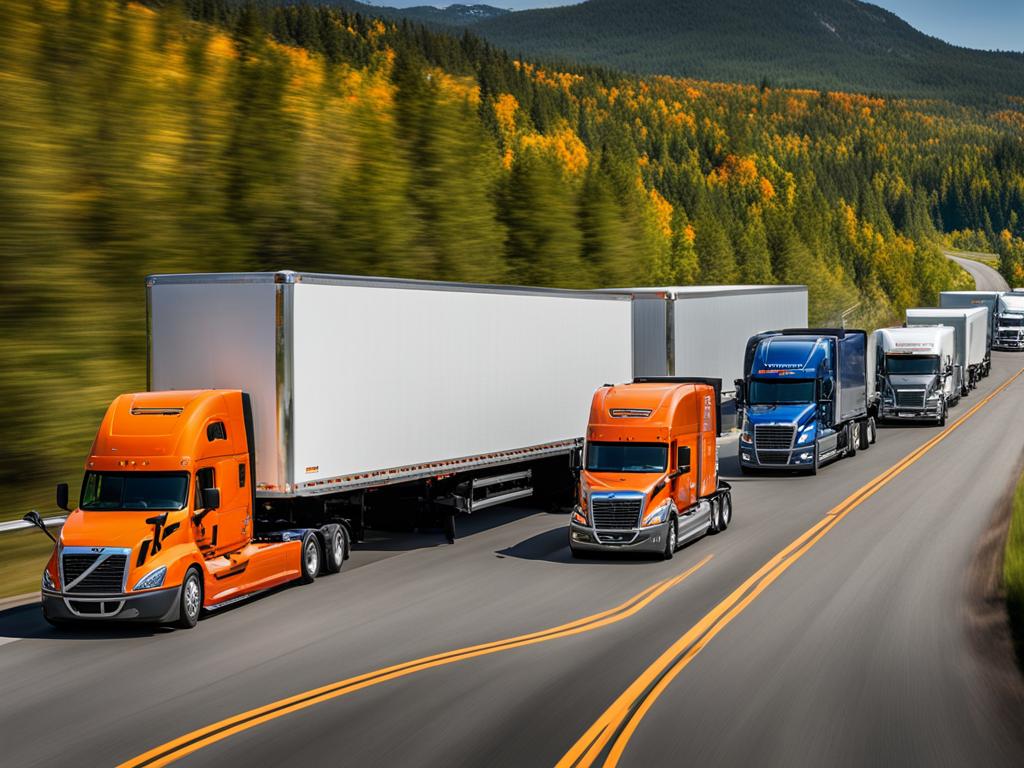
Schneider Trucking, a prominent player in the transportation and logistics industry, is paving the way for innovation and sustainability. This in-depth analysis will delve into the industry trends, market analysis, competitors analysis, and supply chain analysis of Schneider Trucking, shedding light on its position as a leader in the trucking market.
With a strong commitment to sustainability, Schneider Trucking invests in environmentally friendly technologies and practices. As a participant in the North American Council for Freight Efficiency’s annual Fleet Fuel Study, Schneider compares its miles per gallon to the government average, ensuring optimal fuel efficiency. Additionally, Schneider contributes to the council’s goals and priorities as a member of the board of directors.
Schneider Trucking’s dedication to sustainability extends beyond industry participation. They actively engage in the Run on Less initiative, a cross-country road show that showcases sustainable technologies for Class 8 trucks. Through this initiative, Schneider aims to demonstrate the potential for fuel efficiency in the trucking industry.
Key Takeaways:
- Schneider Trucking is committed to sustainability and invests in environmentally friendly technologies.
- They participate in the North American Council for Freight Efficiency’s annual Fleet Fuel Study to compare their fuel efficiency.
- Schneider is a member of the council’s board of directors, contributing to industry goals and priorities.
- They actively engage in the Run on Less initiative, showcasing sustainable technologies for Class 8 trucks.
- Schneider Trucking is a leader in the industry, driving innovation and sustainability in the trucking market.
The Role of Trucks in Delivering Goods Nationwide
Trucks play a crucial role in the delivery of goods across the United States, making the trucking industry an essential component of the transportation sector. With trucks responsible for nearly 70 percent of all goods deliveries, they form the backbone of freight transportation in the country.
Delivering goods nationwide requires extensive mileage and fuel consumption, which can have significant environmental and economic impacts. Recognizing this, Schneider, a prominent player in the trucking industry, is dedicated to promoting fuel efficiency in their operations, striving to reduce their carbon footprint and enhance sustainability.
Fuel Efficiency in the Trucking Industry
Fuel efficiency is a critical concern for the trucking industry, given the substantial amount of fuel consumed during goods transportation. In an effort to minimize the environmental impact, trucking companies like Schneider are continuously seeking ways to improve fuel efficiency in their fleets.
Through innovative technologies and the incorporation of best practices, companies can reduce fuel consumption, lower emissions, and optimize their overall operations. By implementing fuel-efficient measures, trucking companies can contribute to a more sustainable and eco-friendly freight transportation system.
Trucking Industry Statistics
To gain further insights into the importance of the trucking industry, let’s take a look at some key statistics:
| Statistic | Value |
|---|---|
| Percentage of goods delivered by trucks in the United States | Approximately 70% |
| Annual revenue of the trucking industry in the United States | Over $700 billion |
| Number of trucking companies in the United States | Approximately 550,000 |
| Total distance traveled by trucks in the United States each year | Over 450 billion miles |
These statistics highlight the significant role that trucks play in the transportation of goods and the economic impact of the trucking industry as a whole. It underscores the importance of implementing fuel efficiency measures to mitigate environmental impact and enhance sustainability.
Schneider’s Commitment to Sustainability and Environmental Practices
Schneider is dedicated to sustainability and incorporates environmentally friendly technologies and practices in their operations. As a pioneer of sustainable shipping and a leader in green transportation, Schneider’s eco-friendly focus drives their ongoing efforts to make a positive impact on the environment.
Investing in Sustainable Solutions
As part of their commitment to sustainability, Schneider actively invests in environmentally friendly technologies. They continuously explore innovative solutions to reduce their carbon footprint and promote sustainable practices in the transportation industry. By leveraging these technologies, Schneider aims to optimize fuel efficiency, minimize emissions, and contribute to a greener future.
Green Transportation Initiatives
Schneider’s eco-friendly focus extends to their transportation operations. They prioritize green transportation practices to minimize the environmental impact of their shipping activities. From optimizing route planning to adopting fuel-efficient strategies, Schneider ensures that their fleet operates in the most eco-friendly manner possible.
Sustainable Shipping Methods
The company takes pride in pioneering sustainable shipping methods. By incorporating alternative fuels and advanced logistics technologies, Schneider strives to make their shipping processes more sustainable. Their commitment to sustainable shipping not only reduces their environmental impact but also sets the industry standard for green practices.

Schneider’s Contributions to the North American Council for Freight Efficiency
Schneider actively participates in the North American Council for Freight Efficiency (NACFE) and has been a valuable contributor to their annual Fleet Fuel Study for the past six years. This partnership allows Schneider to provide valuable insights into their use of trucking technology, fuel efficiency measures, and valuable trucking industry insights. By actively engaging with NACFE, Schneider has demonstrated its commitment to staying at the forefront of industry innovation and driving enhancements in the trucking industry.
As part of their participation in the NACFE Fleet Fuel Study, Schneider shares their fuel efficiency data, allowing for in-depth analysis and comparison to the government average. This data-driven approach gives valuable insights into the effectiveness of Schneider’s fuel efficiency measures and allows for benchmarking against industry standards.
Insights into Technology Use
Through their involvement with NACFE, Schneider offers detailed insights into their use and acceptance of cutting-edge trucking technologies. By sharing these insights, Schneider contributes to the advancement of the trucking industry by providing real-world data and feedback on the effectiveness of various technologies.
Leadership and Collaboration
Schneider’s dedication to the trucking industry is further exemplified by the appointment of their senior vice president of equipment, maintenance, and driver development to the NACFE board of directors. In this role, Schneider’s senior vice president helps shape the council’s goals and priorities, ensuring that NACFE remains aligned with the needs and interests of industry leaders like Schneider. This collaboration drives the development of innovative solutions and best practices that can benefit the entire trucking industry.
Overall, Schneider’s contributions to NACFE underscore their commitment to improving fuel efficiency and driving positive change in the trucking industry. By actively participating in the NACFE Fleet Fuel Study and providing valuable insights into their use of trucking technology, Schneider continues to be a leader in the pursuit of fuel efficiency and environmental sustainability in the trucking industry.

Run on Less: Demonstrating Fuel Efficiency in Class 8 Trucks
Schneider is proud to be involved in the Run on Less initiative, a cross-country road show organized by the North American Council for Freight Efficiency (NACFE). This initiative is aimed at showcasing the fuel efficiency capabilities of Class 8 trucks and highlighting the sustainable technologies that contribute to reducing fuel consumption in the trucking industry.
Throughout the three-week road show, seven trucks will haul freight across the country, demonstrating various sustainable technologies, such as automated transmissions and low-rolling resistance tires. These technologies play a significant role in improving fuel economy and reducing carbon emissions.
The Run on Less initiative allows industry professionals and stakeholders to gain insights into the latest trucking industry trends, particularly in fuel economy and sustainable technologies. By showcasing the capabilities of Class 8 trucks and the impact of innovative solutions, the initiative encourages the adoption of sustainable practices in the trucking industry.
The progress, costs, and carbon emissions saved during the road show will be meticulously tracked and reported in real-time, providing valuable data and insights for industry experts and policymakers. This information can guide decision-making processes and shed light on the potential benefits of investing in sustainable technologies.
In addition to highlighting the fuel efficiency aspects of Class 8 trucks, the Run on Less initiative also serves as a platform for knowledge sharing and collaboration among industry stakeholders. By bringing together manufacturers, fleet owners, technology providers, and policymakers, the initiative fosters dialogue and encourages the development of sustainable solutions that can drive the future of the trucking industry.
By participating in the Run on Less initiative, Schneider showcases its commitment to sustainability and its dedication to improving fuel economy in the trucking industry. As a leader in the transportation and logistics sector, Schneider continues to explore and adopt innovative technologies that reduce fuel consumption, lessen the environmental impact, and drive positive change in the industry.
Schneider’s Rankings and Achievements in the Industry
Schneider Electric, a renowned energy service company (ESCO), has earned an esteemed position as the top ESCO on the 2017 ESCOs Leaderboard, according to Navigant Research. With a strong commitment to helping organizations enhance their infrastructure and achieve energy efficiency, Schneider Electric has made significant contributions through energy savings performance contracts (ESPCs).
Through their ESPC projects, Schneider Electric has successfully implemented more than 675 initiatives across the United States. These projects have not only generated substantial energy savings but also resulted in impressive cost reductions, with customers saving nearly $2 billion in total. Schneider Electric’s expertise in intelligent systems, integration, and global reach has undoubtedly played a pivotal role in their remarkable success.
Energy Savings Performance Contracts (ESPCs)
Energy savings performance contracts (ESPCs) provided by Schneider Electric are a mechanism to improve infrastructure while achieving energy efficiency. These contracts enable organizations to undertake vital upgrades and improvements without upfront costs, as the investment is recovered through the projected energy savings.
Under an ESPC, Schneider Electric conducts an energy audit to identify potential areas for improvement and designs customized solutions to optimize energy efficiency. The organization then funds and implements the necessary upgrades, including energy management systems, efficient lighting, renewable energy installations, and more. As energy savings are realized, Schneider Electric recovers the investment from the achieved financial benefits, creating a win-win situation for both the organization and the environment.
ESPC projects have been a driving force behind Schneider Electric’s success, making them a trusted partner for businesses across various sectors, including government, healthcare, education, commercial, and industrial.
ESPC Project Examples:
| Industry | Project Type | Total Savings | Location |
|---|---|---|---|
| Hospital | Energy Management System | $1,500,000 | California |
| School District | Lighting Upgrades | $750,000 | Texas |
| Manufacturing | Renewable Energy System | $5,000,000 | Ohio |
These examples demonstrate how organizations from diverse sectors have benefited from Schneider Electric’s ESPC projects, realizing substantial savings while improving their infrastructure and reducing their environmental impact.
Managing Hybrid IT Environments: Insights from Schneider Electric’s Study
Schneider Electric, a leader in energy management and automation, conducted a comprehensive study to gain insights into the evolving landscape of hybrid IT environments. This study explores how the increasing adoption of cloud services has transformed the management of data center infrastructure.
In addition to the impact of cloud services, the study also sheds light on the anticipated rise of distributed IT. With the proliferation of Internet of Things (IoT) devices and emerging edge computing workloads, organizations are faced with the challenge of managing a complex infrastructure landscape. Hybrid data center environments, consisting of a mix of off-premises services, public cloud, and on-premises data centers, are becoming the new normal.
Today, managing this hybrid IT environment is one of the most critical issues faced by enterprise leaders. The need for effective infrastructure management has never been greater. Organizations require a comprehensive strategy that encompasses a holistic approach to managing data centers, cloud services, and distributed IT resources. This includes optimizing resource allocation, ensuring high availability and performance, and maintaining robust security measures.
Schneider Electric’s study provides valuable insights for businesses navigating the complexities of hybrid IT environments. As companies strive to transform their IT infrastructure to meet the demands of the digital age, the study offers guidance on best practices, industry trends, and innovative solutions for efficient infrastructure management.
FAQ
What is Schneider’s approach to sustainability?
Schneider is dedicated to sustainability and incorporates environmentally friendly technologies and practices in their operations. They have been recognized as a pioneer of sustainable shipping and a leader in green transportation. Their focus on being cleaner and greener drives them to continually improve their shipping methods and make their drivers more efficient.
How does Schneider contribute to fuel efficiency in the trucking industry?
Schneider actively participates in the North American Council for Freight Efficiency (NACFE) and has contributed to their annual Fleet Fuel Study for the past six years. They provide insights into their technology use and acceptance, and their miles per gallon are compared to the government average. Schneider’s senior vice president of equipment, maintenance, and driver development serves on the NACFE board of directors and helps define the council’s goals and priorities.
What is the Run on Less initiative that Schneider is involved in?
Schneider is involved in the Run on Less initiative, a cross-country road show organized by NACFE. This initiative aims to demonstrate how Class 8 trucks can achieve the best possible fuel economy through the use of sustainable technologies. Seven trucks will haul freight across the country for three weeks, showcasing different technologies such as automated transmissions and low-rolling resistance tires. The progress, costs, and carbon emissions saved will be tracked and reported in real-time.
What are some of Schneider Electric’s achievements in the energy service industry?
Schneider Electric is ranked as the top energy service company (ESCO) on the 2017 ESCOs Leaderboard from Navigant Research. They help organizations make infrastructure improvements through energy savings performance contracts (ESPCs). They have successfully implemented over 675 ESPC projects across the United States, helping customers save nearly billion. Schneider Electric’s commitment to intelligent systems, integration, and global reach has contributed to their success.
How is Schneider Electric addressing the challenges of managing hybrid IT environments?
Schneider Electric commissioned a study to understand trends in hybrid IT environments. Cloud services have greatly impacted how companies manage their data center infrastructure. The anticipated rise of distributed IT, driven by the Internet of Things (IoT) and emerging edge computing workloads, adds complexity to infrastructure management. Companies are shifting towards hybrid data center environments that consist of a mix of off-premises services, public cloud, and on-premises data centers. Managing this hybrid environment has become one of the most challenging issues for enterprise leaders.
Source Links
- https://schneiderjobs.com/blog/trucking-industry-trends-schneider-nacfe-lead-fuel-efficiency-efforts
- https://perspectives.se.com/higher-ed/transforming-energy-services-topping-the-navigant-research-leaderboard
- https://www.prnewswire.com/news-releases/schneider-electric-and-451-research-deliver-direct-insights-into-hybrid-it-management-from-enterprise-leaders-657999143.html


Leave a Reply