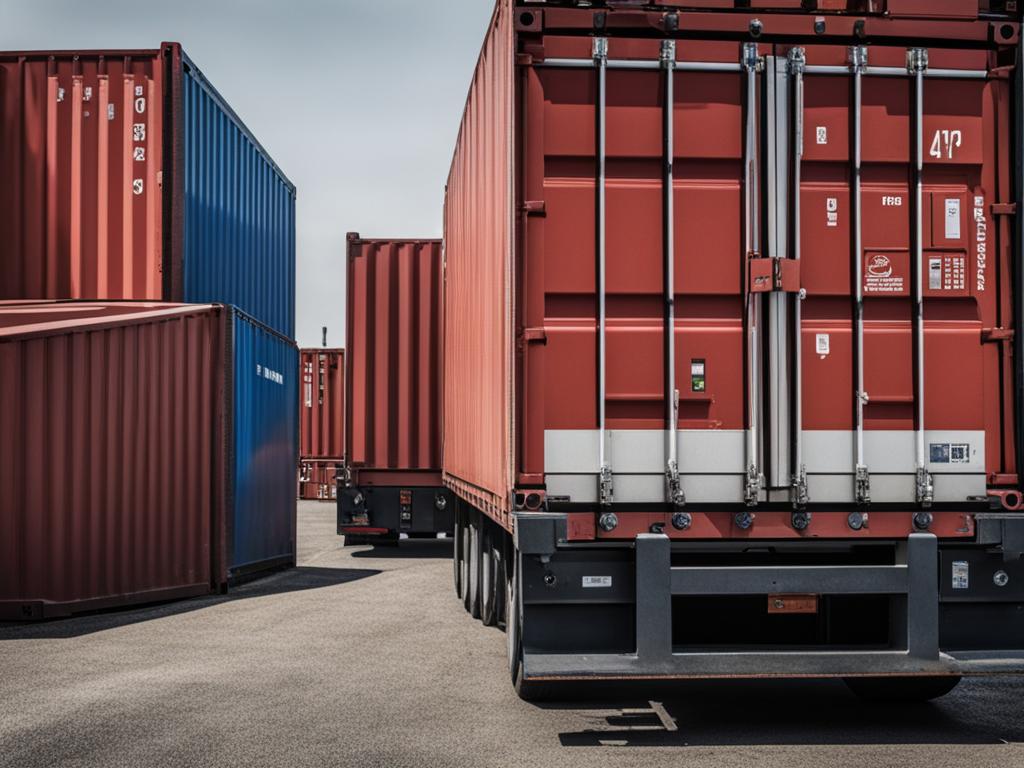
Calculating shipping costs for freight can be influenced by various factors such as freight weight, dimensions, shipping origin and destination, freight class and density, type of goods being shipped, and economic conditions like fuel prices and seasonal demand.
Key Takeaways:
- Freight shipping costs are determined by multiple factors, including weight, dimensions, origin, destination, freight class, and economic conditions.
- Accurate shipment details are crucial for precise freight cost calculations.
- The type of goods being shipped can impact freight rates, with special handling requirements for certain items.
- Economic conditions such as fuel prices and seasonal demand can influence freight rates.
- Proper management and understanding of factors affecting freight costs can help save on expenses.
Factors Influencing Freight Cost Calculations
Freight costs are determined by a multitude of factors that encompass transportation, mode of transportation, and market conditions. To accurately calculate freight costs, it is crucial to have precise shipment details in advance. Several specific factors influence freight cost calculations:
- Freight Weight, Dimensions, or Volume: The weight, dimensions, or volume of the freight plays a significant role in determining the cost. Carriers need this information to allocate the necessary space and comply with weight restrictions.
- Shipping Origin and Destination: The distance between the shipping origin and destination affects freight rates. Longer distances generally result in higher rates due to increased fuel consumption and operational expenses.
- Freight Class and Density: Freight class and density classification impact freight rates, with the National Motor Freight Traffic Association (NMFTA) providing a standardized system for categorizing goods.
- Type of Goods Being Shipped: The type of goods being shipped can impact freight rates. Specialized handling or equipment may be required for certain goods, such as perishable items or hazardous materials.
- Economic Conditions: Economic conditions, such as fuel prices and seasonal demand, can influence freight rates. Fluctuations in fuel prices directly affect transportation costs.
Freight Weight, Dimensions, or Volume
Accurate information regarding the weight, dimensions, and volume of your freight is essential in determining the cost of shipping. Noting the correct dimensions allows carriers to allocate the necessary space on a truck, while the accurate weight ensures compliance with legal weight limits. Freight weight, dimensions, and volume all play a significant role in calculating freight rates.
Measuring the dimensions and weight of your freight accurately is crucial for an optimized shipping experience. Failing to provide precise measurements can result in inaccurate freight quotes, potential additional charges, or even delays in transit. Make sure to utilize the appropriate measurement units, such as pounds and cubic feet, to ensure accuracy and consistency across the shipping industry.
How to Calculate Freight Volume
Freight volume refers to the total amount of space that your freight occupies. Calculating freight volume allows carriers to determine the most efficient use of their transportation resources and optimize the capacity of their trucks. To calculate freight volume, multiply the length, width, and height of the shipment in inches (L x W x H) and divide the result by a dimensional factor.
| Dimensional Factor | Description |
|---|---|
| 139 | For shipments within the United States, excluding Alaska and Hawaii |
| 166 | For shipments to or from Alaska and Hawaii, and for international shipments |
By applying the appropriate dimensional factor, you can accurately determine the freight volume and ensure that carriers have the necessary information to calculate shipping costs efficiently.
Example of a Freight Volume Calculation
- Freight dimensions: Length = 48 inches, Width = 40 inches, Height = 36 inches.
- Calculating freight volume: (48 x 40 x 36) / 139 = 53.24 cubic feet (rounded to two decimal places).

Visual representation of how freight weight, dimensions, and volume influence shipping costs.
Shipping Origin and Destination
When it comes to determining freight rates, one significant factor to consider is the distance between the shipping origin and destination. As a general rule, longer distances often result in higher rates due to increased fuel consumption, labor costs, and operational expenses.
Understanding the precise location details, including accurate ZIP codes, is essential for calculating freight costs. This information allows carriers to accurately estimate the time, resources, and costs required for transportation.
Here is an example table showcasing how distance affects freight rates:
| Distance (in miles) | Freight Rate |
|---|---|
| 0-100 | $500 |
| 101-300 | $800 |
| 301-500 | $1,200 |
| 501-1000 | $1,800 |
As seen in the table, the freight rate increases as the distance between the shipping origin and destination grows.
To illustrate the importance of the shipping origin and destination, consider the example of shipping goods from New York, NY to Los Angeles, CA, which is approximately 2,800 miles. The long distance contributes to higher fuel costs, increased labor hours, and additional operational expenses, resulting in a higher freight rate compared to shipping goods within a shorter distance.
Freight Class and Density
In the world of freight shipping, understanding how freight is classified and its density is crucial to accurately calculate freight rates. The National Motor Freight Traffic Association (NMFTA) has established the National Motor Freight Classification (NMFC) system, which categorizes goods based on their characteristics, including density, handling, and liability. Let’s explore the concepts of freight class and density and their impact on freight rates.
Freight Class
Freight class is a standardized classification system that determines the appropriate category for less-than-truckload (LTL) shipments. It is based on the dimensions and weight of the freight, as well as its vulnerability to damage, ease of handling, and value. The NMFC assigns a numeric freight class ranging from 50 to 500, with lower numbers representing lower freight rates.
Each class corresponds to a specific rate per hundredweight (CWT), which is the weight in hundred pounds. The lower the freight class, the lower the rate per CWT. This classification system allows carriers to assess the risks and costs associated with transporting different types of freight.
Freight Density
Freight density is another important factor in calculating freight rates. It refers to the amount of space occupied by the freight in relation to its weight. Density is calculated by dividing the weight of the shipment (in pounds) by its volume (in cubic feet). The higher the density, the more efficiently the space is utilized, resulting in lower shipping costs.
Carriers consider the density of a shipment to determine how much space it will occupy in their trucks. They aim to maximize their load capacities and minimize wasted space. Freight with a high density allows carriers to transport more goods within the same space, making it more cost-effective.

| Freight Class | Description |
|---|---|
| 50 | Lowest cost, highest density, easy to handle |
| 55 | Low density, highly susceptible to damage |
| 60 | Neutrally good density and handling characteristics |
| 65 | Low density, easy to handle |
| 70 | Low density, easy to handle |
Understanding freight class and density is vital for both shippers and carriers. Shippers can determine the most cost-effective ways to package and ship their goods, while carriers can accurately assess the space and handling requirements for different types of freight. By optimizing freight class and density considerations, businesses can save on shipping costs and ensure the efficient transport of their goods.
Type of Goods
The type of goods being shipped plays a significant role in determining freight rates. Various types of goods may require special handling or specific equipment, which can impact the overall shipping cost. Let’s take a closer look at how different types of goods can affect your freight expenses.
Perishable Items
For perishable items that require temperature-controlled transportation, additional equipment such as refrigerated trucks or containers may be necessary. These specialized shipping requirements can increase freight rates due to the higher cost of maintaining the desired temperature throughout the journey. Transporting perishable goods often involves strict timelines and requires careful monitoring to ensure product integrity and freshness.
Hazardous Materials
When shipping hazardous materials, it is crucial to comply with strict safety regulations and ensure proper handling and transportation. The transportation of hazardous goods involves additional risks and requires carriers to adhere to specific safety protocols and obtain necessary permits. Shipping hazardous materials may also require additional documentation and compliance with hazardous materials labeling requirements.
High-Value Goods
High-value goods, such as luxury items or valuable equipment, often require additional insurance coverage to protect against loss or damage during transit. The higher the value of the goods being shipped, the higher the insurance premiums, which can impact the overall freight cost. Carriers may charge higher rates for transporting high-value goods due to the increased responsibility and potential risks associated with handling such valuable cargo.
Specialized Equipment
Some goods may require specialized equipment for safe transportation. For example, oversize or heavy items may necessitate the use of flatbed trailers, while fragile or delicate goods could require specific packaging and handling procedures. Utilizing specialized equipment adds an extra layer of complexity to the shipping process, which can result in higher freight costs.
Considering the type of goods being shipped is essential when estimating freight costs. By understanding the specific requirements and potential challenges associated with different types of goods, you can better plan and budget for your shipping needs.
| Type of Goods | Impact on Freight Rates |
|---|---|
| Perishable Items | Higher rates due to temperature-controlled shipping requirements |
| Hazardous Materials | Additional safety protocols and documentation may result in increased costs |
| High-Value Goods | Higher insurance premiums and potential surcharges |
| Specialized Equipment | Possible need for specialized equipment can impact rates |

Economic Conditions
The economic conditions surrounding the shipping industry have a significant impact on freight rates. Various factors, including fuel prices, seasonal demand, and market dynamics, contribute to the fluctuations in shipping costs.
Fuel Prices:
The cost of fuel plays a crucial role in determining transportation costs and, consequently, freight rates. Fluctuations in fuel prices directly impact the operational expenses of carriers, leading to potential increases in shipping costs. When fuel prices rise, transportation companies may adjust their rates to compensate for the additional overhead.
Seasonal Demand:
The demand for freight transportation varies throughout the year based on seasonal factors. During peak shipping times, such as the holiday season, the demand for shipping services significantly increases. This surge in demand can lead to higher freight rates as carriers seek to capitalize on the increased volume of shipments. On the other hand, during slower periods, freight rates may fluctuate, potentially resulting in cost-saving opportunities for shippers.
Market Conditions:
The overall market conditions, including supply and demand dynamics and competition among carriers, also contribute to freight rate fluctuations. When the demand for shipping services exceeds the available capacity, carriers have more leverage and can charge higher rates. Conversely, when there is a surplus of available trucks and lower demand, shippers may have more bargaining power and can potentially secure lower freight rates.
To better understand the impact of economic conditions on freight rates, consider the following table:
| Economic Conditions | Impact on Freight Rates |
|---|---|
| Fuel Prices | Increases transportation costs and potentially leads to higher freight rates |
| Seasonal Demand | Affects shipping volumes and can result in higher or fluctuating freight rates |
| Market Conditions | Supply and demand dynamics and competition influence freight rates |

How to Save on Freight Costs
To save on freight costs, proper management is crucial. Understanding the cost of shipping freight and eliminating unnecessary services can help reduce expenses. By effectively managing the following factors, you can develop cost-saving strategies and optimize your freight operations.
1. Freight Weight, Dimensions, and Volume
Accurate measurement and documentation of your freight’s weight, dimensions, and volume are essential for calculating freight costs. Providing precise information to carriers enables them to allocate the appropriate space on their trucks and ensures compliance with weight restrictions. By accurately measuring your freight, you can prevent any surprises during the shipping process and avoid additional charges for incorrect information.
2. Shipping Origin and Destination
The distance between the shipping origin and destination is a key factor in determining freight rates. Longer distances generally result in higher rates due to increased fuel consumption, labor costs, and operational expenses. By strategically choosing shipping locations and consolidating shipments, you can minimize the distance traveled and save on freight costs.
3. Freight Class and Density
Familiarize yourself with the National Motor Freight Classification (NMFC) system, which categorizes goods based on density, handling, and liability. Ensuring your freight is correctly classified can prevent expensive reclassifications and disputes. Additionally, optimizing your freight’s density by packing efficiently can lead to lower freight costs.
4. Type of Goods
Consider the specific requirements of your freight to avoid unnecessary expenses. Certain goods may require special handling, equipment, or documentation, which can increase freight costs. By understanding the unique characteristics of your goods, you can select the most cost-effective shipping options without compromising on quality.
5. Economic Conditions
Stay informed about economic factors that influence freight rates, such as fuel prices and seasonal demand. By monitoring market dynamics and adjusting your shipping schedules accordingly, you can take advantage of lower rates during periods of decreased demand.
6. Utilize Technology and Freight Management Solutions
Investing in freight management software and technology can help streamline your shipping processes, reduce errors, and save on freight costs. These solutions provide real-time visibility, automate freight booking and documentation, optimize transportation routes, and consolidate shipments.
Implementing these cost-saving strategies can help you optimize your freight operations and reduce expenses. Remember to continuously evaluate and improve your freight management practices to stay competitive and maximize savings.
Supply and Demand in Freight Origin and Destination
Supply and demand dynamics have a significant impact on determining freight rates. Various factors, such as the availability of equipment and the total volume of goods to be transported, influence the balance between supply and demand.
When there is high demand for freight shipments and limited availability of carriers, prices tend to rise. On the other hand, when there is an increased supply of carriers and a lower volume of goods to be moved, freight rates may decrease.
Several factors affect the supply and demand equilibrium in freight origin and destination:
Regional Factors:
- The geographical location of the origin and destination plays a crucial role in supply and demand. Certain regions may have higher demand for goods, leading to increased freight rates.
- Factors like population density, industrial activity, and economic growth contribute to regional supply and demand dynamics.
Seasonality:
- Seasonal fluctuations in supply and demand affect freight rates. For example, during peak shipping seasons, such as the holiday season, demand for transportation services increases, resulting in higher rates.
- Understanding seasonal patterns can help businesses plan shipments strategically and negotiate more favorable rates.
Equipment Types:
- The availability of specific types of transportation equipment, such as trucks, containers, or railcars, influences supply and demand.
- If there is a shortage of a particular type of equipment, transport capacity may be constrained, leading to higher freight rates.
It is essential for businesses to consider the supply and demand dynamics in both the freight origin and destination locations when estimating and negotiating freight rates. By staying informed about these factors, businesses can make more informed decisions to optimize their shipping costs.
The Urgency of Your Shipment
The urgency of your shipment plays a significant role in determining the cost you’ll pay. Planning ahead and providing adequate lead time can help reduce expenses and ensure a smooth delivery process. However, last-minute shipments often come with higher prices due to limited availability of trucks and increased demand.
Providing ample lead time allows carriers to efficiently allocate resources and plan accordingly, resulting in more cost-effective and on-time deliveries. This approach minimizes the risk of unexpected delays and allows for better optimization of shipping routes. By prioritizing lead time, you can enhance your overall shipping experience and potentially save on freight costs.
Your Freight’s Length of Haul
The distance your freight needs to travel to its final destination is an indicator of the price you will pay. Generally, longer hauls tend to cost more, but they also have a better rate-per-mile. Freight length of haul is categorized into different distances, such as short-haul, mid-haul, tweener, long-haul, and extended long-haul.
Freight Length of Haul Categories
| Category | Description |
|---|---|
| Short-haul | Distances ranging from 0 to 200 miles. |
| Mid-haul | Distances ranging from 201 to 500 miles. |
| Tweener | Distances ranging from 501 to 1,000 miles. |
| Long-haul | Distances ranging from 1,001 to 2,000 miles. |
| Extended long-haul | Distances exceeding 2,000 miles. |
Understanding the length of haul of your freight can help you estimate the costs associated with shipping. Whether you have a short-haul or an extended long-haul, considering the distance can contribute to effective financial planning and decision-making.
Factors Influencing Pricing
Several factors impact pricing based on the length of haul:
- Distance: Longer distances generally require more resources and result in higher transportation costs.
- Time: Longer hauls take more time to complete, impacting labor and other operational expenses.
- Regulations: Different regions may have specific regulations and restrictions for freight transportation, which can influence costs.
- Infrastructure: Availability and condition of the transportation infrastructure, such as highways and bridges, can affect pricing.
Considering these factors alongside the length of haul can help you determine the overall cost of shipping your freight.
How Weather Impacts Shipment Price
Severe weather events can have significant implications for the shipping industry, leading to price increases and disruptions in supply chain operations. When inclement weather strikes, safety concerns and limited availability of drivers can result in higher shipping prices.
The impact of weather on shipping prices can be attributed to various factors. Firstly, the safety of drivers and the condition of transportation routes become a crucial concern during severe weather conditions. When roads or ports are unsafe or inaccessible, shipments may be delayed or halted altogether. This leads to limited capacity and increased demand for available shipping services, which in turn drives up prices.
Furthermore, the limited availability of drivers during inclement weather can put additional strain on the shipping industry. Drivers may be unwilling or unable to embark on routes that are affected by hazardous weather conditions, leading to a shortage of capacity. As a result, the reduced supply of drivers creates a higher demand for those who are willing to transport goods during challenging weather, leading to higher shipping prices.
Supply and demand dynamics also play a significant role in determining shipping prices during severe weather events. With fewer drivers available, the supply of shipping services decreases. However, demand for transportation remains relatively constant, or even increases as businesses seek alternative solutions to meet their shipping needs. The resulting supply-demand imbalance can drive shipping prices up as carriers capitalize on the scarcity of available capacity.
It is important for businesses to consider the potential impact of weather events on shipment prices in their supply chain planning and budgeting. By accounting for increased shipping costs during inclement weather, companies can make more accurate financial projections and ensure that their operations remain sustainable even in challenging conditions.
Examples of Weather-Related Shipping Price Increases
| Weather Event | Impact on Shipping Price |
|---|---|
| Winter Storm | Higher demand for temperature-controlled shipping services leads to increased prices for transporting perishable goods |
| Hurricane | Disruptions in port operations and limited availability of drivers result in higher shipping prices for affected regions |
| Flooding | Restricted access to transportation routes and increased safety concerns lead to higher shipping costs in flood-affected areas |
It is crucial for businesses to monitor weather forecasts and proactively adjust their shipping strategies when severe weather events are expected. By doing so, companies can mitigate the impact of weather-related disruptions on shipping prices and ensure the efficient movement of goods even in challenging conditions.
How Accessorials Impact Freight Price
When calculating freight rates, it is important to consider the impact of accessorials. Accessorials refer to additional services or requirements that can affect the overall cost of shipping. These services can include drop trailers, tarping, and driver assistance, among others. However, it is crucial to carefully select only the necessary accessorials to avoid unnecessary expenses.
Each additional service comes with extra charges, which can significantly impact the final freight price. By understanding how different accessorials influence the cost, shippers can optimize their shipping expenses and avoid any unexpected financial burdens. Being mindful of the need for specific accessorials can help streamline operations and ensure a more cost-effective shipping process.
For example, if a shipment requires driver assistance in loading or unloading, it is essential to account for the additional labor and time involved. This service may result in higher fees due to the extra effort required from the driver. Similarly, requesting drop trailers or tarping services can incur additional costs, depending on the carrier’s policies. By carefully assessing the necessity of these accessorials, shippers can make informed decisions that minimize expenses while still meeting their shipment requirements.
Optimizing freight costs involves attention to detail and a thorough understanding of how accessorials impact prices. By selecting only the necessary services and negotiating with carriers, shippers can effectively manage their budget and ensure a more streamlined shipping experience. Being proactive in assessing accessorials’ impact on freight prices is an essential step in optimizing shipping expenses and driving overall operational efficiency.
FAQ
How much does freight shipping cost?
Freight shipping costs can vary depending on factors such as freight weight, dimensions, shipping origin and destination, freight class and density, type of goods being shipped, and economic conditions like fuel prices and seasonal demand.
How are freight costs calculated?
Freight costs are calculated based on factors such as freight weight, dimensions, or volume; shipping origin and destination; freight class and density; type of goods being shipped; and economic conditions like fuel prices and seasonal demand.
What role does freight weight, dimensions, or volume play in determining freight rates?
Freight weight, dimensions, and volume are crucial in determining freight rates. Accurate weight and dimensions help carriers determine the space required on a truck, and the weight affects the maximum weight a carrier can legally haul.
How does the shipping origin and destination impact freight rates?
The distance between the shipping origin and destination is a significant factor in determining freight rates. Longer distances generally result in higher rates due to increased fuel consumption, labor costs, and operational expenses.
What is freight class and density, and how do they impact freight rates?
Freight class and density are determined by dimensions and weight, and they help determine the correct freight classification for less-than-truckload (LTL) freight. The National Motor Freight Traffic Association (NMFTA) has established a standardized classification system called the National Motor Freight Classification (NMFC) to categorize goods based on characteristics such as density, handling, and liability.
How does the type of goods being shipped impact freight rates?
The type of goods being shipped can impact freight rates. Certain goods may require special handling or equipment, such as temperature-controlled equipment for perishable items. Hazardous or high-value goods may also require additional documentation or insurance.
How do economic conditions like fuel prices and seasonal demand affect freight rates?
Economic conditions such as fuel prices, seasonal demand, and market dynamics can influence freight rates. Fluctuations in fuel prices can lead to increased transportation costs and, consequently, higher freight rates. Seasonal demand, such as during peak shipping times, can also impact rates. Overall market conditions, including supply and demand dynamics and competition among carriers, can influence freight rates.
How can I save on freight costs?
Proper management is crucial for saving on freight costs. Understanding the cost of shipping freight and eliminating unnecessary services can help reduce expenses. Managing factors such as freight weight, dimensions, origin, destination, class, density, type of goods, and economic conditions can contribute to cost-saving strategies.
How does supply and demand impact freight rates in the origin and destination areas?
Supply and demand play key roles in determining freight rates. The availability of equipment and the total amount of goods needing to be moved influence supply and demand. Higher demand and limited supply can drive up prices, while increased supply can lead to lower rates. Factors such as region, seasonality, and equipment type impact the balance between supply and demand.
How does the urgency of my shipment affect the cost I will pay?
The urgency of your shipment can affect the cost you will pay. Planning ahead and providing adequate lead time can help reduce costs. Last-minute shipments often come with higher prices due to limited availability of trucks and increased demand. Lead time is essential for cost-effective and on-time delivery.
How does the length of haul impact freight rates?
The distance your freight needs to travel to its final destination is an indicator of the price you will pay. Generally, longer hauls tend to cost more, but they also have a better rate-per-mile. Freight length of haul is categorized into different distances, such as short-haul, mid-haul, tweener, long-haul, and extended long-haul.
How does severe weather impact shipment prices?
Severe weather events can disrupt the shipping industry, leading to price increases. Safety concerns and limited availability of drivers during inclement weather can result in higher prices. Supply and demand dynamics play a role, as fewer drivers lead to higher prices for those willing to move freight in challenging weather conditions.
How do accessorials impact freight prices?
Accessorials are additional services or requirements that can impact freight rates. Services like drop trailers, tarping, and driver assistance come with extra charges. Understanding how different accessorials impact freight prices can help optimize shipping expenses.


Leave a Reply