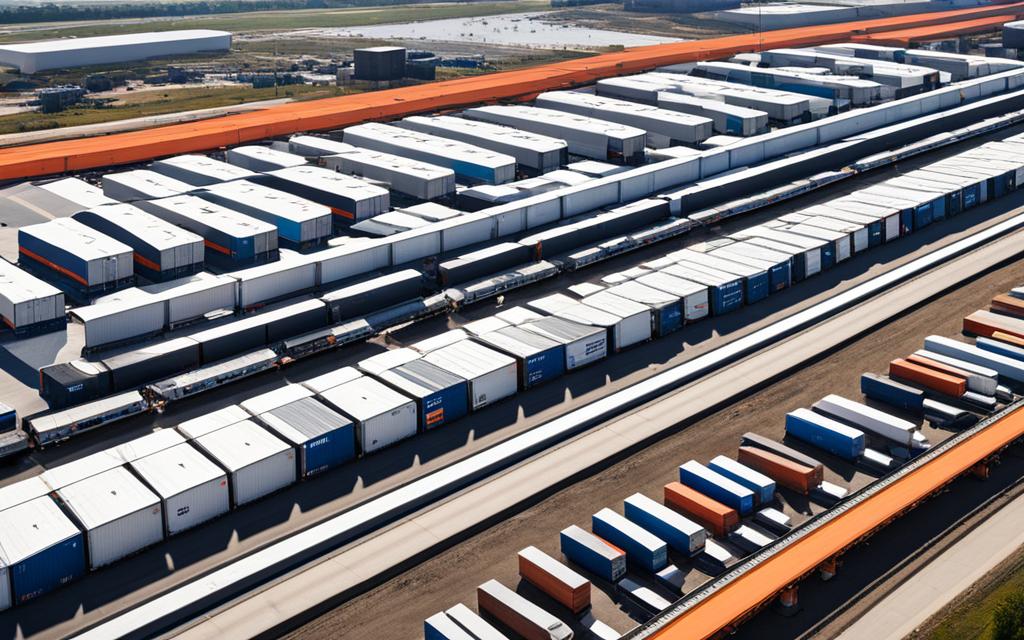
As the logistics and transportation industry continues to evolve, Uber Freight is leading the way with its ambitious expansion plans. With a focus on revolutionizing the trucking industry and freight management, Uber Freight is leveraging technology and innovative strategies to shape the future of supply chain, shipping, and delivery.
Uber Freight recently unveiled its commitment to investing in modern technology, which was showcased at the Deliver 2023 conference. The event emphasized the potential of technology in powering the future of freight and highlighted Uber Freight’s dedication to driving innovation across the supply chain.
One of the key updates presented by Uber Freight is the revamped Transportation Management System (TMS), which aims to improve visibility, procurement options, and efficiency for shippers. The Uber Freight Exchange and the Insights AI were also introduced as new technology solutions that provide actionable insights and enhanced functionalities for freight management. These advancements highlight Uber Freight’s dedication to optimizing logistics approaches and improving overall operations.
Furthermore, Uber Freight is committed to sustainability and environmental responsibility. They are working towards creating a zero emissions logistics platform and have made significant efforts to eliminate empty miles from their network. They are also actively exploring the adoption of electric trucks and supply chain visibility solutions to reduce carbon emissions.
With a strong focus on technology, sustainability, and strategic partnerships, Uber Freight is set to shape the future of the freight marketplace and redefine the standards of fleet management.
Key Takeaways:
- Uber Freight is investing in modern technology to drive innovation in the supply chain and trucking industry.
- They have introduced revamped TMS, Uber Freight Exchange, and Insights AI to improve visibility and efficiency.
- Uber Freight is committed to sustainability and aims to create a zero emissions logistics platform.
- They are exploring the adoption of electric trucks and supply chain visibility solutions to reduce carbon emissions.
- Through strategic partnerships and technological advancements, Uber Freight is shaping the future of fleet management and freight marketplace.
Technology and Innovation at Deliver 2023
Deliver 2023, an event that brought together over 300 of the world’s largest brands, showcased the potential of technology to revolutionize the freight industry. Uber Freight’s Founder and CEO, Lior Ron, emphasized their commitment to investing in modern technology and highlighted their approach of “relational logistics” which combines technology and industry expertise to improve logistics outcomes.
During the event, Uber Freight unveiled new technology updates that are set to reshape the industry. These updates include:
- A revamped Transportation Management System (TMS), enhancing visibility and streamlining operations.
- Uber Freight Exchange, a platform that expands procurement options for shippers and carriers.
- Insights AI, an innovative artificial intelligence solution that provides actionable insights and optimization recommendations for shippers.
The technology showcased at Deliver 2023 demonstrates Uber Freight’s commitment to providing cutting-edge solutions for the logistics industry. These advancements offer improved visibility, expanded procurement options, and actionable insights, empowering shippers to make data-driven decisions and optimize their supply chain operations.
One of the highlights of the event was the demonstration of innovative AI solutions developed during Uber Freight’s Hackathon. This showcased the capabilities of generative AI in solving complex shipper problems and optimizing logistics operations. The integration of AI technology further solidifies Uber Freight’s position as a leader in leveraging technology for innovation within the industry.
With their relentless focus on technology and innovation, Uber Freight is driving the future of logistics approaches. The company’s vision and commitment to staying at the forefront of technological advancements are evident in their expansion plans showcased at Deliver 2023.
Example Table: Uber Freight Technology Updates
| Technology Updates | Benefits |
|---|---|
| Revamped TMS | Enhanced visibility and streamlined operations |
| Uber Freight Exchange | Expanded procurement options for shippers and carriers |
| Insights AI | Artificial intelligence solution providing actionable insights for shippers |
Sustainable Supply Chain and Emission Reduction Efforts
Uber Freight is dedicated to building a sustainable supply chain and reducing emissions in the logistics industry. With their commitment to a zero emissions platform, they have already eliminated 2.3 million empty miles from their network in the past 12 months. This significant reduction in wasted miles not only improves efficiency but also contributes to emissions reduction.
To further their efforts, Uber Freight is focused on gaining end-to-end visibility into the supply chain. By identifying areas where emissions can be reduced, such as through intermodal transportation and the adoption of electric trucks, they are actively working towards decarbonization. Electrifying local hauls in large markets is a strategic approach they are taking to kickstart emission reduction.
Uber Freight has identified cities like Los Angeles, Ontario, Atlanta, Dallas, and New York as strong candidates for early electrification. These urban centers present opportunities for the adoption of electric trucks and the establishment of infrastructure to support sustainable transportation. Recognizing the impact of interstates on overall emissions, Uber Freight also emphasizes the importance of interstate electrification. As interstates carry more than half of all trucking miles, their electrification plays a pivotal role in achieving meaningful emissions reductions.
Charging infrastructure development is a critical aspect of Uber Freight’s emission reduction plans. They are actively researching and advocating for the expansion of charging facilities along major transportation routes. Leveraging shippers’ facilities as charging stations is one approach that can help in doubling the charging infrastructure’s reach.
Embedding sustainability within the supply chain not only aligns with environmental goals but also drives overall efficiency in the logistics industry. By prioritizing sustainable practices and emissions reduction, Uber Freight’s expansion plans promote a greener and more future-forward approach to freight management.
Electric trucks form a crucial part of Uber Freight’s strategy for a sustainable supply chain and emissions reduction. Through the adoption of electric vehicles, the logistics industry can significantly reduce its carbon footprint and move towards a cleaner future.
The Role of AI in Freight Optimization
Uber Freight is at the forefront of leveraging AI technology to optimize freight operations and enhance efficiency. By harnessing the power of AI, they are able to revolutionize the way freight is managed and delivered, creating a more streamlined and cost-effective process.
Generative AI for Load Analysis
One of the key AI solutions developed by Uber Freight is generative AI, specifically designed for load analysis. This advanced technology utilizes data such as load history and GPS pings to identify supply-demand imbalances and recommend smart coverage options. By analyzing patterns and trends, generative AI helps shippers make data-driven decisions and optimize their freight strategies.
Intelligent Freight Management Assistant
Uber Freight has also introduced an intelligent freight management assistant called AppointAssist. This AI tool automates load appointment confirmations, reducing lead times and improving operational efficiency. With automated appointment management, shippers can save valuable time and resources, ultimately increasing productivity.
Gaining Insight with Large Language Models
Another notable AI tool offered by Uber Freight is Carrier Itineraries. This tool utilizes large language models to create tailored and efficient load bundles, offering innovative solutions for carrier scheduling. By leveraging the power of AI, Uber Freight is able to optimize network utilization and maximize efficiency in load planning.
Overall, AI plays a crucial role in freight optimization, enhancing load analysis, providing smart coverage options, and streamlining freight management processes. The intelligent technology offered by Uber Freight is revolutionizing the logistics industry, leading to increased productivity and cost-effectiveness.
| Benefits of AI in Freight Optimization |
|---|
| Increased productivity |
| Cost-effectiveness |
| Enhanced load analysis |
| Smart coverage options |
| Streamlined freight management |
The Importance of Shippers and Network Expansion
Uber Freight recognizes the vital role of shippers in the logistics ecosystem and has incorporated their needs into their expansion plans. By prioritizing strengthening relationships and providing added value, Uber Freight aims to enhance the overall experience for shippers.
One key aspect of Uber Freight’s expansion plans is the focus on expanding procurement options for shippers. Through the Uber Freight Exchange, shippers have access to a wide network of carriers, enabling them to acquire capacity at better costs. This platform also allows shippers to tailor their carrier relationships based on their specific requirements.
To further streamline the procurement process, Uber Freight emphasizes the need for bid technology that goes beyond the standard annual Request for Proposal (RFP) process. By utilizing advanced bid technology, shippers can procure the most cost-effective carriers at any given time, enhancing efficiency and cost-effectiveness.
Last-mile delivery is another area where Uber Freight is investing in improvements to benefit shippers. They have developed technology like their Parcel TMS (Transportation Management System) that streamlines the onboarding process for carriers. This technology provides visibility into last-mile rates, enabling shippers to make informed decisions regarding their delivery options.
The overall objective of Uber Freight’s expansion plans is to enhance the shippers’ experience and expand their network. By investing in technology, developing strategic partnerships, and prioritizing the needs of shippers, Uber Freight aims to create a seamless and efficient logistics platform.
Insights from Industry Professionals and Community Engagement
Deliver 2023 went beyond the freight industry, providing attendees with invaluable insights from notable professionals from various fields. The event featured industry leaders who shared their expertise and perspectives, offering a fresh outlook on leadership, community engagement, social responsibility, and humanitarian efforts.
Nate Mook: Humanitarian Efforts and Logistics Impact
Former CEO of World Central Kitchen, Nate Mook, captivated the audience with powerful stories of the organization’s incredible humanitarian efforts. He highlighted the pivotal role that logistics plays in delivering food to those in need, emphasizing the importance of efficient and strategic supply chain management in serving communities during challenging times.
Jill Ellis: Leadership Insights on Leading with Empathy
Jill Ellis, former U.S. Women’s National Soccer Team coach, shared her profound leadership insights on the value of empathy. She stressed the significance of understanding and connecting with team members, fostering an inclusive and supportive environment that promotes collaboration and maximizes individual and collective potential.
Alan Beaulieu: Economic Trends and Business Next Steps
Alan Beaulieu, President of ITR Economics, provided attendees with a comprehensive analysis of economic trends and future business strategies. He shared valuable insights on market dynamics, helping industry professionals navigate economic uncertainties efficiently and make informed decisions while adapting to changing conditions.
Highlighting their commitment to community engagement and social responsibility, Uber Freight partnered with Feeding America San Diego during Deliver 2023. The event featured a charitable activity where participants raised funds and packed meals for families in need. This initiative demonstrated Uber Freight’s dedication to making a positive impact on local communities and addressing pressing social issues.
The insights gained from industry professionals and the community engagement activities at Deliver 2023 left attendees inspired and energized. The event served as a platform to exchange ideas, foster collaboration, and encourage the evolution of logistics strategies that integrate leadership, social responsibility, and humanitarian efforts into the industry’s fabric.
Uber Freight’s Vision for Clean Transportation
Uber Freight is leading the way in creating a carbon-free future by accelerating the transition to clean transportation. As part of their commitment, they have set an ambitious goal to shift 80% of their global brokerage shipments to clean transportation by 2040.
To support their vision, Uber Freight has partnered with Greenlane to expedite the development and installation of public charging infrastructure for Heavy Duty Battery Electric Vehicles (HDBEVs). This collaboration aims to overcome one of the key challenges in the adoption of electric trucks – the availability of a robust public charging network.

Uber Freight’s decarbonization roadmap, based on comprehensive network data analysis, provides valuable insights into the most impactful strategies for achieving a carbon-free future. The research highlights the significance of starting with the electrification of local hauls in large markets, where electric trucks can make a significant difference in reducing emissions.
However, Uber Freight recognizes that achieving a carbon-free future requires more than just electrification. It also emphasizes the importance of charging infrastructure along interstates for long-distance freight electrification. To ensure the success of this transition, Uber Freight emphasizes the need for North America’s grid to be prepared for the increased electricity demand, underscoring the crucial role played by the power capacity of charging stations.
In summary, Uber Freight’s vision for clean transportation encompasses a comprehensive approach that includes electric trucks, public charging infrastructure, and a decarbonization roadmap. By spearheading the adoption of clean transportation, Uber Freight is driving positive environmental change and shaping the future of the freight industry.
Strategic Considerations for Uber Freight’s Future
As Uber Freight looks towards the future, strategic decisions are being carefully considered to shape the trajectory of the company as a standalone entity focused on the freight industry. These considerations include potential options such as an outright sale or spinning off the business into a separately traded entity via an IPO.
By exploring these strategic options, Uber Freight aims to provide investors with the opportunity to focus specifically on the future of freight, allowing the business to operate with some independence from Uber. Monetizing its operations and capitalizing on market trends are key factors driving these decisions.
However, it’s important to note that an IPO in the current market environment may pose challenges, and rigorous evaluation of market conditions is crucial before a decision is made. The ultimate goal is to position Uber Freight as a new, public company that can thrive in the ever-evolving freight industry.
Strategic Options
There are two main strategic options being considered for Uber Freight’s future:
- Outright Sale: Selling the Uber Freight business to a suitable buyer who can drive its growth and leverage its potential in the freight industry.
- Separate Entity via IPO: Spinning off Uber Freight into a separately traded entity, potentially through an initial public offering (IPO), allowing investors to directly invest in and support the future of freight.
Monetization and Market Trends
Monetizing the operations of Uber Freight is a key consideration in the strategic decision-making process. By exploring an outright sale or conducting an IPO, Uber Freight aims to tap into the financial potential of the freight industry and leverage market trends.
Market trends indicate a growing demand for efficient and reliable freight solutions, presenting ample opportunities for growth and revenue generation. By strategically aligning with these market trends, Uber Freight aims to position itself as a leading player in the industry.
Future Outlook
The strategic decisions for Uber Freight’s future will play a crucial role in determining the company’s trajectory as a standalone entity focused on the freight industry. These decisions will shape its approach to innovation, expansion, and meeting the evolving needs of shippers and carriers.
While careful evaluation is necessary to navigate challenges and market conditions, the future of Uber Freight holds immense potential for growth and success, solidifying its position as a key player in the freight industry.
| Strategic Considerations for Uber Freight’s Future | Benefits |
|---|---|
| Outright Sale |
|
| Separate Entity via IPO |
|
The Challenges and Opportunities for Uber Freight’s Business Model
Uber Freight operates on a tech-driven platform, connecting shippers and carriers to facilitate efficient freight connections. The success of their business model relies on an algorithm that determines pricing based on factors such as supply and demand, market conditions, and other relevant data.
However, Uber Freight has encountered its share of challenges. A weaker demand environment and category-wide headwinds have led to a top- and bottom-line miss for Q4. While the company’s revenues have experienced year-over-year growth, the rate of that growth has slowed down.
Unlike Uber’s ride-hailing and delivery business, which has seen success through cross-pollination, the same approach is not directly applicable to Uber Freight. The unique dynamics of the freight industry call for careful evaluation and adaptation to market conditions for sustainable growth.
To overcome these challenges and capitalize on opportunities, Uber Freight must stay attuned to changing demand and supply patterns. Continuous refinement of their algorithm and implementation of strategic initiatives can pave the way for steady revenue growth and long-term success. By closely monitoring market trends and leveraging their tech-driven platform, Uber Freight can optimize their business model and navigate headwinds effectively.

Opportunities for Uber Freight’s Business Model
Although challenges abound, there are also significant opportunities for Uber Freight’s business model. By focusing on the following areas, Uber Freight can position itself for success:
- Expanding their network of shippers and carriers to increase market presence and diversify revenue streams.
- Continually refining their algorithm to enhance pricing accuracy and optimize supply and demand dynamics.
- Embracing data analytics to gain deeper insights into market trends, customer preferences, and freight demand.
- Investing in automation and digitalization to streamline operations and improve efficiency.
- Exploring strategic partnerships and collaborations to leverage complementary strengths and expand service offerings.
| Challenges | Opportunities |
|---|---|
| Weaker demand environment | Expanding network to tap into untapped markets |
| Category-wide headwinds | Refining algorithm to optimize pricing and supply-demand dynamics |
| Slower revenue growth rate | Embracing data analytics for deeper market insights |
| Unique dynamics of freight industry | Investing in automation and digitalization for operational efficiency |
By addressing these challenges head-on and capitalizing on the opportunities that lie ahead, Uber Freight can strengthen its business model and continue to revolutionize the freight industry.
The Role of AI and Data Analytics in Uber Freight’s Operations
Uber Freight’s operations are driven by the power of AI technology and data analytics. These innovative tools play a central role in optimizing their operations and ensuring reliability, cost-effectiveness, and efficient network utilization.
With access to a vast dataset and expertise in freight sustainability, Uber Freight leverages AI technology to optimize routes and maximize the utilization of electric trucks in their network. Through sophisticated data analytics, they can gain valuable insights into market penetration and effectively roll out electric trucks.
Uber Freight’s focus on AI and data analytics positions them uniquely to navigate the logistical complexities involved in integrating and deploying electric vehicles at scale. By harnessing the potential of these technologies, they are committed to improving overall efficiency and sustainability in the freight industry.
Benefits of AI and Data Analytics in Uber Freight’s Operations
| Benefits | Description |
|---|---|
| Optimization | AI technology and data analytics enable Uber Freight to optimize routes and maximize the utilization of electric trucks in their network, leading to efficient operations and reduced costs. |
| Reliability | By leveraging AI technology, Uber Freight ensures reliable and accurate decision-making, enhancing the overall reliability of their operations. |
| Cost-effectiveness | Data analytics allows Uber Freight to identify cost-saving opportunities, optimize pricing strategies, and streamline operations, resulting in increased cost-effectiveness. |
| Network Utilization | Through data analysis, Uber Freight can efficiently utilize their network, matching available capacity with demand and maximizing the efficiency of their operations. |
The Future of Uber Freight and the Need for Adaptation
The future of Uber Freight relies on its ability to adapt and respond to the constantly evolving market trends and dynamics of the supply chain industry. While Uber Freight operates under the broader Uber platform model, it faces unique challenges and opportunities specific to the freight sector. To ensure long-term success, Uber Freight must closely monitor market trends, stay attuned to supply chain dynamics, and prioritize customer needs.
As Uber Freight explores strategic options, it must consider the current business environment, which includes factors such as inflation and shifting consumer spending patterns. Adapting to change is crucial, as it enables the company to remain agile and make informed strategic decisions. The ability to navigate through uncertainties and embrace new approaches will determine Uber Freight’s ability to maintain its top line momentum and remain competitive in the marketplace.
Moreover, staying ahead of the curve requires a deep understanding of emerging market trends and disruptions within the supply chain industry. Uber Freight must proactively identify and capitalize on opportunities brought about by advancements in technology, changing customer expectations, and evolving regulatory requirements. By keeping pace with these trends, Uber Freight can effectively position itself as a leader in the market and strengthen its value proposition to shippers and carriers.
In summary, the future of Uber Freight hinges on its adaptability and responsiveness to market dynamics. By harnessing market trends, optimizing supply chain dynamics, and embracing change, Uber Freight can secure its position as an innovative and reliable partner in the freight industry.
FAQ
What were the technology updates unveiled by Uber Freight at Deliver 2023?
Uber Freight unveiled a revamped TMS, Uber Freight Exchange, and Insights AI to improve visibility, procurement options, and efficiency.
How is Uber Freight using AI technology in their operations?
Uber Freight is leveraging AI technology to optimize freight operations, analyze data for supply-demand imbalances, automate load appointment confirmations, and create tailored load bundles for efficient carrier scheduling.
What are Uber Freight’s sustainable supply chain efforts?
Uber Freight aims to create a zero emissions logistics platform by identifying areas to reduce emissions, adopting electric trucks, and eliminating empty miles. They focus on electrifying local hauls in large markets and developing charging infrastructure along interstates.
How does Uber Freight prioritize shippers’ experience?
Uber Freight aims to expand procurement options through the Uber Freight Exchange, streamline the RFP process, and improve last-mile delivery through technology like the Parcel TMS for enhanced carrier onboarding and visibility into last-mile rates.
What were the insights shared by professionals outside the freight industry at Deliver 2023?
Nate Mook, former CEO of World Central Kitchen, shared insights on humanitarian efforts, Jill Ellis, former U.S. Women’s National Soccer Team coach, provided leadership insights, and Alan Beaulieu, President of ITR Economics, provided economic trends and next steps for businesses.
How is Uber Freight working towards clean transportation?
Uber Freight aims to shift 80% of their global brokerage shipments to clean transportation by 2040. They collaborate with Greenlane to accelerate the development of public charging infrastructure for electric trucks and have a decarbonization roadmap based on network data analysis.
What are the strategic options being considered for Uber Freight’s future?
Uber Freight is considering options such as an outright sale or spinning off the business into a separately traded entity via an IPO to become a new, public company. The decision will be based on market conditions and the goal of capitalizing on market trends.
How does Uber Freight optimize their operations using AI and data analytics?
Uber Freight utilizes AI technology and data analytics to optimize routes, maximize electric truck utilization, and improve overall efficiency and cost-effectiveness in their operations.
What challenges does Uber Freight’s business model face?
Uber Freight faces challenges such as a weaker demand environment and category-wide headwinds. The cross-pollination between ride-hailing and delivery is not directly applicable to the Freight business, requiring careful evaluation and adaptation to market dynamics.
What is the future of Uber Freight and the need for adaptation?
The future of Uber Freight depends on its ability to adapt to changing market dynamics, supply chain trends, and customer priorities. The company must make strategic decisions and adapt to change to ensure long-term success.


Leave a Reply