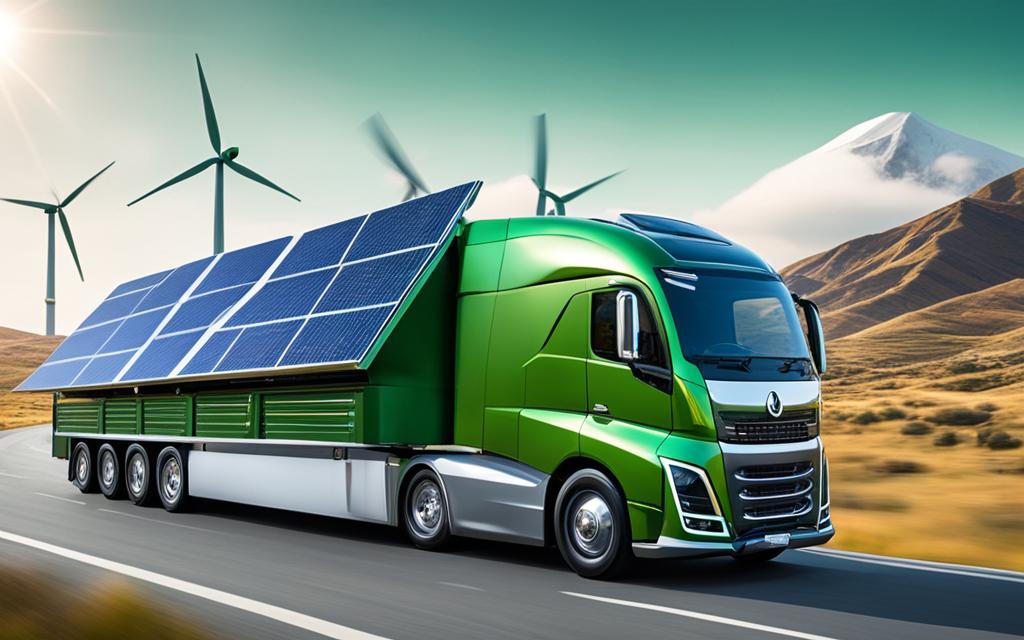
As the demand for eco-friendly transportation and sustainable supply chains continues to grow, companies in the logistics industry are stepping up their efforts to reduce carbon footprints and adopt renewable energy solutions. Among these trailblazers is Uber Freight, the freight-hauling counterpart of the popular ride-sharing platform. Uber Freight is committed to transforming the freight industry and creating a more sustainable future through their green logistics initiatives.
Uber Freight understands the urgent need to address environmental concerns and is actively working towards reducing carbon emissions and optimizing resource utilization. Through a combination of innovative technologies, strategic partnerships, and forward-thinking practices, the company is driving change and making a significant impact on the transportation sector.
Key Takeaways:
- Uber Freight is dedicated to green logistics and sustainability in the freight industry.
- They are implementing various initiatives to reduce carbon footprints and optimize resource utilization.
- Uber Freight leverages technology like Transportation Management Systems (TMS) to reduce empty miles and improve vehicle utilization.
- Powerloop, an innovative program by Uber Freight, reinvents the trailer pool model and benefits small carriers.
- Collaborations with electric vehicle innovators and sustainable shipping options are integral parts of Uber Freight’s sustainability journey.
Reducing Empty Miles and Optimizing Routes
Uber Freight understands the significance of reducing empty miles and optimizing routes in the freight industry. By leveraging advanced technology, such as Transportation Management Systems (TMS), Uber Freight aims to match available trucks with loads efficiently and streamline route planning. By doing so, they aim to minimize empty miles and improve the effective utilization of vehicles, resulting in reduced carbon emissions and enhanced resource utilization.
The prevalence of empty miles poses a challenge to the sustainability of the freight industry, contributing to unnecessary fuel consumption and higher carbon emissions. However, by optimizing routes, Uber Freight can significantly reduce the number of empty miles and improve overall operational efficiency.
The integration of Transportation Management Systems (TMS) allows Uber Freight to consolidate data on available trucks, customer demands, and real-time traffic conditions. By analyzing this data, Uber Freight can generate optimized routes that minimize the distance traveled, reduce fuel consumption, and ultimately lower carbon emissions.
Through the effective utilization of TMS and the optimization of routes, Uber Freight not only reduces the environmental impact by minimizing carbon emissions but also enables more efficient resource allocation. By maximizing the utilization of vehicles, Uber Freight can transport more goods without increasing the number of trips, contributing to an overall reduction in energy consumption and a more sustainable freight industry.
Optimizing routes and reducing empty miles are crucial steps towards achieving a greener and more sustainable logistics sector. By employing technology-driven solutions and efficient vehicle utilization, Uber Freight is at the forefront of the industry’s transformation, working towards a future with reduced carbon emissions and optimized resource utilization.
The Benefits of Reducing Empty Miles and Optimizing Routes
- Lower carbon emissions: By eliminating unnecessary miles and optimizing routes, Uber Freight significantly reduces carbon emissions, contributing to a greener and more sustainable logistics industry.
- Improved resource utilization: Optimizing routes ensures efficient vehicle utilization, maximizing the capacity and productivity of each truck. This reduces the need for additional trips and conserves valuable resources.
- Enhanced efficiency: By leveraging Transportation Management Systems and data-driven analytics, Uber Freight streamlines operations, minimizes travel distances, and reduces fuel consumption. This results in enhanced operational efficiency and cost savings for both Uber Freight and its customers.
- Reduced environmental impact: Reducing empty miles and optimizing routes play a crucial role in minimizing the environmental impact of the freight industry. By adopting these practices, Uber Freight contributes to a more sustainable future by conserving valuable resources and reducing carbon emissions.
Powerloop: Reinventing Trailer Pool Model
Uber Freight is continuously innovating in the freight industry to create a more sustainable and efficient workflow. One of their groundbreaking initiatives is Powerloop, which aims to reinvent the traditional trailer pool model.
Powerloop revolutionizes the way asset-based carriers operate by allowing them to pick up and drop off pre-loaded trailers at shipper facilities. This eliminates the need for carriers to wait for trailers to be loaded or unloaded, reducing both costs and waiting time.
One of the significant advantages of Powerloop is its positive impact on small carriers. By providing them with more frequent opportunities to find backhauls, Powerloop helps optimize their operations and reduces downtime. This not only benefits small carriers by improving their profitability but also contributes to a more sustainable workflow in the transportation industry.
With Powerloop, small carriers can enjoy a more streamlined and efficient process while contributing to a greener future. By embracing the unique nature of small carriers in the transportation ecosystem, Uber Freight is actively transforming the industry and creating a more sustainable and resilient supply chain.
Benefits of Powerloop:
- Reduced waiting time for carriers
- Increased efficiency in operations
- More frequent opportunities for small carriers to find backhauls
- Optimized workflow and reduced downtime
- Contribution to a sustainable transportation industry
Sustainable Practices for Logistics Specialists
Logistics specialists play a vital role in the freight industry, and their efforts towards sustainability are critical in achieving carbon emissions reduction and process improvement. Uber Freight recognizes the importance of supporting these specialists in their sustainability journey, enabling them to contribute to more eco-friendly supply chains through bandwidth optimization and the adoption of sustainable practices.
By partnering with Uber Freight, logistics specialists can leverage the platform’s advanced technology and streamlined processes to reduce the amount of work required for tendering and setting appointments for drop loads. This optimization not only frees up valuable time but also allows specialists to allocate their bandwidth towards crucial tasks such as optimization, reporting, and identifying opportunities for process improvement.
One of the key benefits of bandwidth optimization is the reduction in carbon emissions. By minimizing repetitive administrative tasks, logistics specialists can focus on strategic decision-making, improving efficiency, and implementing sustainable practices. The reallocation of resources and the feedback loop created through collaboration with Uber Freight enable continuous process improvement, resulting in a positive impact on sustainability.
Benefits of Sustainable Practices for Logistics Specialists:
- Efficient Resource Utilization: By optimizing bandwidth, logistics specialists can allocate their time and expertise more effectively, leading to improved resource utilization and operational efficiency.
- Carbon Emissions Reduction: By focusing on sustainability, logistics specialists can actively contribute to reducing carbon emissions in the transportation industry, helping to combat climate change.
- Process Improvement: With more bandwidth available, logistics specialists can dedicate their efforts towards identifying areas for process improvement, streamlining operations, and enhancing overall supply chain performance.
- Collaborative Approach: Partnering with Uber Freight allows logistics specialists to be part of a collaborative ecosystem that promotes sustainable practices, knowledge sharing, and industry-wide advancements.
By embracing sustainable practices and optimizing bandwidth, logistics specialists can not only improve their own operational efficiency but also contribute to making the freight industry greener and more sustainable. Their efforts, combined with the advanced technology and support provided by Uber Freight, create a powerful combination that drives positive change and paves the way for a more sustainable future.
Electric Vehicles and Autonomous Trucks Integration
As part of their commitment to sustainability, Uber Freight is embracing the future of transportation by integrating fully electric vehicles and autonomous trucks into their operations. This forward-thinking approach aims to reduce idle times, optimize appointments, and gradually decrease dependence on traditional diesel trucks. By incorporating renewable energy solutions and sustainable transportation practices, Uber Freight is actively working towards a significant reduction in their carbon footprint and promoting a greener future in the logistics industry.

Benefits of Electric Vehicles
Electric vehicles play a vital role in achieving sustainable transportation. With zero tailpipe emissions, they provide a cleaner alternative to conventional diesel trucks, contributing to improved air quality and reduced greenhouse gas emissions. Electric vehicles are also more energy-efficient, converting a greater percentage of energy into useful work compared to internal combustion engines. The integration of electric vehicles in Uber Freight’s fleet supports their commitment to carbon footprint reduction and aligns with global efforts to mitigate climate change.
Advancements in Autonomous Trucks
Autonomous trucks offer exciting opportunities for the transportation industry. With advanced technologies such as sensors, artificial intelligence, and connectivity, these vehicles can enhance safety, reduce human error, and optimize fuel efficiency. While fully autonomous trucks are still in development, Uber Freight is actively exploring the integration of autonomous features into their operations. By combining electric and autonomous technologies, Uber Freight aims to create a more sustainable and efficient transportation network.
Collaborations for Clean Transportation
Uber Freight understands the crucial role collaboration plays in achieving clean transportation goals. By partnering with industry-leading electric vehicle innovators such as Volvo Autonomous Solutions, Aurora, and Waabi, Uber Freight is actively working towards integrating autonomous vehicles into the supply chain. This collaboration is aimed at further reducing emissions and promoting sustainable technology development in the logistics sector.
Stakeholder involvement is key to driving positive change in the industry. Uber Freight emphasizes the need for industry-wide buy-in to foster a collective commitment to clean energy and sustainable practices. By uniting stakeholders across the logistics sector, we can simplify and accelerate the transition to a more sustainable future.
To demonstrate the impact of collaboration, here’s a breakdown of the emissions reduction potential through these partnerships:
| Collaboration | Emissions Reduction Potential |
|---|---|
| Volvo Autonomous Solutions | Integration of electric and autonomous trucks |
| Aurora | Advancement of self-driving technology |
| Waabi | Pioneering autonomous vehicle technology |
Through these collaborations, Uber Freight is committed to reducing emissions, fostering sustainable solutions, and driving innovation in the logistics sector. By embracing clean transportation practices and involving stakeholders, we can collectively contribute to a greener future.
Stay tuned for the next section, where we explore sustainable shipping options and network optimization with a focus on fuel efficiency and eco-friendly supply chains.
Sustainable Shipping Options and Network Optimization
Uber Freight is dedicated to offering sustainable shipping options and optimizing their network to promote eco-friendly supply chains. By leveraging data, artificial intelligence, and logistics applications, Uber Freight creates efficient routes and transitions from traditional freight to more sustainable alternatives.
One of the key focuses is on fuel efficiency, where Uber Freight aims to eliminate inefficiencies and reduce carbon emissions. By properly planning routes and minimizing empty miles, they help customers make immediate efficiency improvements. This not only benefits the bottom line but also contributes to the development of a greener transportation industry.
Artificial intelligence plays a crucial role in optimizing network operations and enhancing sustainability. By analyzing vast amounts of data, Uber Freight can identify efficient routes, reduce congestion, and minimize the environmental impact of transportation.
Benefits of Sustainable Shipping Options and Network Optimization:
- Reduced carbon footprint: By optimizing routes and eliminating empty miles, Uber Freight significantly reduces carbon emissions, making a positive environmental impact.
- Eco-friendly supply chains: By offering sustainable shipping options, Uber Freight enables businesses to align their logistics operations with eco-friendly practices, contributing to a greener supply chain.
- Cost savings: Optimized routes and improved fuel efficiency lead to significant cost savings for both Uber Freight and its customers.
- Streamlined operations: Network optimization helps to eliminate congestion and delays, resulting in improved service and faster delivery times.
- Data-driven decision-making: Leveraging advanced technologies and data analytics allows Uber Freight to make informed decisions that align with sustainability goals.

Through sustainable shipping options and network optimization, Uber Freight strives to shape a more efficient, environmentally conscious logistics industry. By combining data-driven strategies, fuel efficiency measures, and the power of artificial intelligence, they are driving positive change and helping businesses achieve their sustainability objectives.
The Importance of Electric Vehicles in Carbon Reduction
Uber Freight recognizes the crucial role of electric vehicles (EVs) in achieving carbon reduction goals and supporting global environmental targets. The transition to EVs is particularly significant in meeting the global warming target set by the Paris Agreement. According to a study, for the world to keep global warming within 2 degrees Celsius, EVs need to account for at least 90% of the global vehicle stock by 2050.
Aside from carbon reduction, EVs offer numerous health benefits due to their zero-emission nature. The International Council on Clean Transportation highlights the positive impact of zero-emission vehicles on air quality, reducing pollutants that contribute to respiratory and cardiovascular diseases. By advocating for EV adoption and promoting their use in logistics operations, Uber Freight aims to contribute to a cleaner and healthier environment.
Putting Sustainability First: Tools for Monitoring Emissions
Uber Freight is dedicated to prioritizing sustainability in the logistics industry. As part of their commitment, they provide tools for monitoring emissions, empowering clients to make informed decisions with sustainability in mind. By measuring the impact of emissions and adopting sustainable practices, Uber Freight aims to integrate sustainability into all aspects of logistics decision-making.
Through the power of data and technology, Uber Freight strives to simplify and accelerate the transition towards a more sustainable and eco-friendly logistics industry. By harnessing the power of data, they can monitor and analyze emissions data, enabling them and their clients to make data-driven decisions that have a positive impact on sustainability efforts.
The availability of emissions monitoring tools empowers logistics professionals to track and optimize their operations in real-time. By having access to accurate emissions data, logistics specialists can identify areas of improvement, implement sustainable practices, and reduce their carbon footprint effectively. With the help of these tools, Uber Freight is driving the industry towards a more sustainable future.
FAQ
What sustainability initiatives has Uber Freight implemented?
Uber Freight has implemented various sustainability initiatives, including optimizing routes, reducing empty miles, and integrating electric and autonomous vehicles into their operations. They are committed to creating a more sustainable future in the freight industry.
How does Uber Freight optimize routes and reduce carbon emissions?
Uber Freight leverages technology, such as Transportation Management Systems (TMS), to match available trucks with loads and optimize routes. By eliminating empty miles and improving the efficient utilization of vehicles, Uber Freight aims to reduce carbon emissions in the freight industry.
What is Powerloop and how does it contribute to sustainability?
Powerloop is an innovative program introduced by Uber Freight that reinvents the traditional trailer pool model. It allows asset-based carriers to pick up and drop off pre-loaded trailers at shipper facilities, reducing costs, and waiting time. This program also benefits small carriers, providing them with opportunities for finding backhauls more frequently and reducing downtime, contributing to a more sustainable workflow in the transportation industry.
How do Uber Freight’s sustainability initiatives benefit logistics specialists?
Uber Freight’s sustainability initiatives benefit logistics specialists by reducing the amount of work required for tendering and setting appointments for drop loads. This optimization process improves efficiency and contributes to reducing carbon emissions. It also allows logistics specialists to focus on optimization, reporting, and other important tasks, leading to continuous process improvement and a positive impact on sustainability.
How is Uber Freight integrating electric vehicles and autonomous trucks into their operations?
Uber Freight is looking towards the future by gradually integrating fully electric and autonomous trucks into their operations. This transition aims to reduce idle times, optimize appointments, and decrease dependence on traditional diesel trucks. By embracing renewable energy solutions and sustainable transportation practices, Uber Freight is working towards a significant reduction in their carbon footprint and a greener future in the logistics industry.
How does Uber Freight collaborate for clean transportation?
Uber Freight collaborates with electric vehicle innovators like Volvo Autonomous Solutions, Aurora, and Waabi to integrate autonomous vehicles into the supply chain and further reduce emissions. They emphasize the need for industry-wide buy-in and the transition to clean energy. Through collaboration and the adoption of sustainable practices, the logistics sector can simplify and accelerate the transition to a more sustainable future.
What are the sustainable shipping options provided by Uber Freight?
Uber Freight provides sustainable shipping options and optimizes their network using data, artificial intelligence, and logistics applications. By eliminating fuel inefficiencies, properly planning routes, and reducing empty miles, Uber Freight helps customers make immediate efficiency improvements and contributes to the development of eco-friendly supply chains.
Why are electric vehicles important in carbon reduction?
Electric vehicles (EVs) play a crucial role in carbon reduction and meeting global warming targets set by the Paris Agreement. Studies suggest that EVs need to represent at least 90% of the global vehicle stock by 2050 to achieve these targets. Additionally, EVs offer health benefits associated with zero-emission vehicles. Uber Freight advocates for EV adoption and supports their use in logistics to contribute to a cleaner and healthier environment.
How does Uber Freight prioritize sustainability and emissions monitoring?
Uber Freight puts sustainability first by providing tools for monitoring emissions. They empower clients to make logistics decisions with sustainability in mind. By measuring emissions impact and adopting sustainable practices, Uber Freight aims to make sustainability an integral part of logistics decision-making. Through the power of data and technology, they strive to simplify and accelerate the transition towards a more sustainable and eco-friendly logistics industry.


Leave a Reply