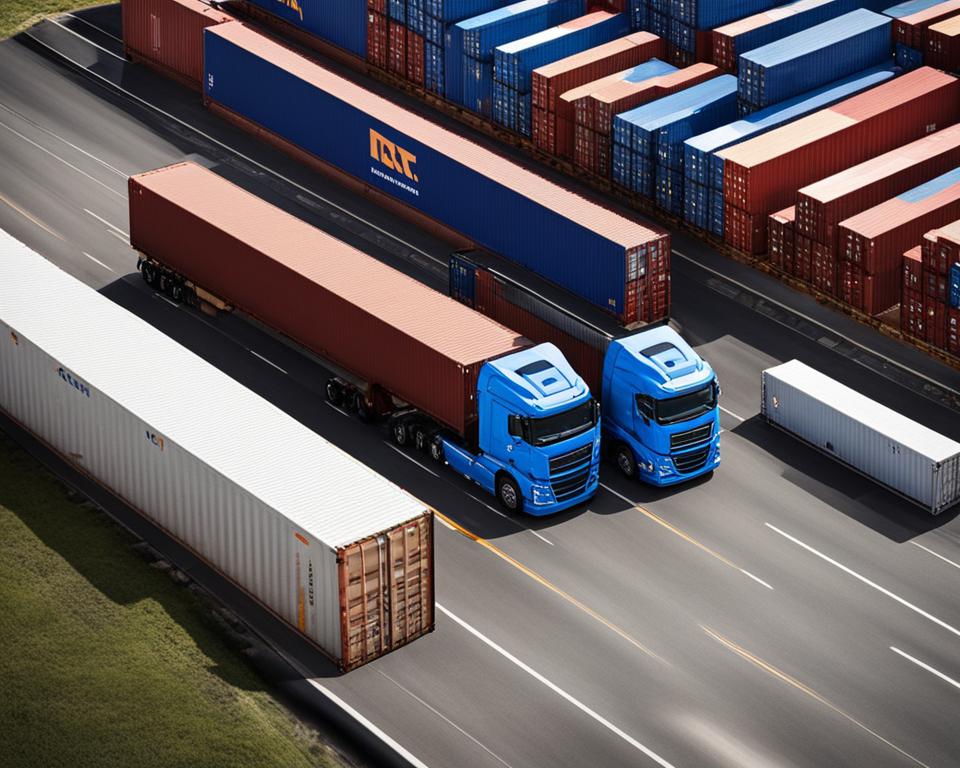
A freight broker and a carrier play vital roles in the freight industry, but their responsibilities differ significantly. It’s essential to comprehend these distinctions to make well-informed decisions regarding your logistics needs.
Key Takeaways:
- A freight broker acts as a middleman, connecting shippers with carriers and negotiating rates.
- A carrier is responsible for physically moving the freight from one location to another.
- Carriers have geographical restrictions, while freight brokers can operate nationwide.
- In terms of liability for claims, carriers are generally legally responsible, but reputable freight brokers can assist in resolving disputes.
- Working with a freight broker provides access to expertise, operational flexibility, and potential cost-saving alternatives.
Responsibility to Shipper
In the freight industry, both carriers and freight brokers have specific responsibilities to shippers. Understanding these responsibilities is crucial when making logistics decisions. Let’s take a closer look at the responsibilities of carriers and freight brokers when it comes to serving shippers.
Responsibility of Carriers
Carriers play a crucial role in shipping by physically transporting the freight from one location to another. They own the trucks or transportation equipment used for transportation. Carriers are responsible for handling the entire transportation process, from pickup to delivery. Their primary objective is to ensure that the freight reaches its intended destination safely, securely, and on time.
Responsibility of Freight Brokers
On the other hand, freight brokers act as intermediaries between shippers and carriers. Their primary responsibility is to connect shippers with carriers and negotiate competitive rates on behalf of the shipper. Instead of directly handling the transportation, freight brokers focus on finding carriers that meet the shipper’s requirements and ensuring the smooth coordination of the shipping process.
By collaborating with a freight broker, shippers can save time and effort by outsourcing the carrier selection and negotiation process. Additionally, freight brokers often have access to a network of carriers, enabling them to find the best matches for specific shipping needs.
While carriers directly handle the physical transportation, freight brokers play a vital role in streamlining the logistics process for shippers. They act as a single point of contact for multiple carriers, enabling shippers to simplify their shipping operations and reduce costs through competitive rates.
| Responsibility | Carrier | Freight Broker |
|---|---|---|
| Primary Role | Physically transporting the freight from one location to another. | Connecting shippers with carriers and negotiating rates. |
| Ownership | Owns and operates trucks or transportation equipment. | Does not own physical assets; acts as an intermediary. |
| Responsibility to Shipper | Ensuring safe, secure, and timely delivery of the freight. | Coordinating the shipping process and finding suitable carriers. |
| Benefits for Shippers | Direct control over transportation; single point of contact. | Time-saving; access to a network of carriers; cost-saving through competitive rates. |

Geographical Restrictions
In the freight industry, geographical restrictions play a significant role in determining the capabilities of carriers and freight brokers. Carriers typically operate within specific areas or regions, focusing on high-demand locations where they have established hubs and competitive pricing. These areas tend to have well-developed transportation networks, making it easier for carriers to efficiently move freight from one point to another. However, for remote or rural areas where demand is lower or infrastructure is limited, carriers may collaborate with regional carriers to ensure timely and cost-effective delivery.
In contrast, freight brokers are not bound by geographical restrictions in the same way. Since they don’t manage physical assets or trucks, they can operate from any location and provide services nationwide. Freight brokers often have main offices in popular shipping areas and satellite offices across the country, allowing them to cover a wide range of locations. This flexibility enables freight brokers to meet the needs of shippers regardless of their geographic location, making them a convenient option for businesses with diverse shipping requirements.
Geographic Coverage Comparison
| Carriers | Freight Brokers | |
|---|---|---|
| Operational Area | Focused on specific regions | Nationwide coverage |
| Infrastructure | Established hubs in high-demand areas | Main offices in shipping areas, satellite offices nationwide |
| Remote Locations | Collaboration with regional carriers | Ability to handle remote areas efficiently |
As seen in the comparison table, carriers tend to have a narrower operational area, focusing on specific regions or areas with high demand. Meanwhile, freight brokers have the advantage of nationwide coverage and the flexibility to handle shipments to remote or rural locations. This distinction allows freight brokers to offer comprehensive logistic solutions to businesses operating in various locations, catering to their unique transportation needs.
It’s important for shippers to understand the geographical restrictions of carriers and the broader coverage provided by freight brokers. By considering these factors, businesses can make informed decisions when selecting their logistics partner and ensure seamless transportation operations.

Liability for Claims
When it comes to liability for claims, there are distinct differences between carriers and freight brokers. Carriers are generally legally responsible for any damage or loss that occurs during transportation, as mandated by the Carmack Amendment. As the party physically handling the freight, carriers assume the direct responsibility from pick up to delivery.
On the other hand, freight brokers typically do not have legal liability for freight damage. However, reputable freight brokers often have claims experts who can assist shippers in resolving disputes and filing claims with the carrier. While the carrier is legally responsible, freight brokers have an ethical duty to support shippers during complex situations.
It is important for shippers to understand the liability distinctions between carriers and freight brokers. When working with carriers, shippers can seek recourse directly from the responsible party in the event of loss or damage. In cases where a freight broker is involved, they can provide valuable guidance and assistance to shippers in navigating the claims process and holding carriers accountable.
Liability Comparison: Carriers vs. Freight Brokers
| Liability Aspect | Carrier | Freight Broker |
|---|---|---|
| Legal Responsibility | Generally liable for damage or loss during transportation | Not legally liable for freight damage |
| Claims Assistance | N/A | Claims experts can assist shippers in resolving disputes and filing claims with the carrier |
| Ethical Duty | N/A | Freight brokers have an ethical duty to support shippers during complex situations |
While carriers bear the legal responsibility for freight loss or damage, freight brokers play a crucial role in helping shippers navigate the claims process. By working together, carriers and freight brokers can ensure that shippers receive the necessary support and resolution in the event of a claim. Shippers should carefully assess the liability offerings of carriers and the claims assistance provided by freight brokers when making their logistics decisions.
Advantages of Using a Freight Broker
A freight broker offers numerous advantages for businesses in need of transportation services. By leveraging their expertise, operational flexibility, and cost-saving alternatives, working with a freight broker can streamline your logistics processes and improve overall efficiency.
Expertise in the Freight Industry
One of the key advantages of using a freight broker is their extensive knowledge and experience in the freight industry. They have a deep understanding of carriers, shipping routes, and best practices. This expertise allows them to efficiently match shippers with the most suitable carriers for their specific needs. Whether you require specialized equipment or have unique shipping requirements, a freight broker can provide valuable guidance and recommendations.
Operational Flexibility
Freight brokers offer operational flexibility by working with multiple carriers. Rather than relying on a single carrier, they have access to a vast network of carriers, allowing you to choose the most suitable option for each shipment. This flexibility ensures that your freight is always moved efficiently and on time, even during peak seasons or when unexpected circumstances arise. Additionally, freight brokers can handle logistics coordination, including booking, tracking, and managing multiple shipments simultaneously.
Cost-Saving Alternative
Working with a freight broker can often result in cost savings compared to dealing directly with carriers. Freight brokers have established relationships with carriers, which allows them to negotiate better rates and secure cost-saving alternatives. They can leverage their network and industry insights to optimize shipping routes, consolidate shipments, and reduce overall transportation expenses. By choosing a freight broker, you can achieve cost efficiency without compromising on service quality.
| Advantages of Using a Freight Broker |
|---|
| Expertise in the Freight Industry |
| Operational Flexibility |
| Cost-Saving Alternative |
Choosing Between a Freight Broker and Carrier
When it comes to managing your logistics and transportation needs, choosing between a freight broker and a carrier is a decision that requires careful consideration. Each option offers its own advantages and considerations, and understanding your specific requirements is crucial in making an informed decision.
If you prefer a hands-off approach and want a reliable partner to handle all aspects of the transportation process, working with a freight broker may be the best option for you. Freight brokers act as intermediaries, connecting shippers with carriers and negotiating rates on your behalf. With their industry expertise and network of carriers, they can provide operational flexibility and cost-saving alternatives.
On the other hand, if you have the resources and expertise to manage your own transportation and prefer direct control over carrier selection, working directly with a carrier could be the preferred choice. By working with a carrier, you can have more control over the entire transportation process and ensure that your specific requirements are met. However, it’s important to consider the additional responsibilities and challenges that come with managing your own transportation operations.
In the end, choosing between a freight broker and a carrier depends on your logistics needs, budget, and desired level of involvement. Take the time to evaluate your priorities and make an informed decision that aligns with your business objectives and resources. Whether you choose a freight broker or a carrier, both options can help you effectively manage your transportation needs and ensure the smooth flow of goods.
FAQ
What is the difference between a freight broker and a carrier?
A freight broker acts as a middleman, connecting shippers with carriers and negotiating rates. A carrier is responsible for physically moving the freight from one location to another.
What is the primary responsibility of a carrier?
The primary responsibility of a carrier is to handle the transportation of the freight, owning the trucks or transportation equipment and directly moving the cargo from one place to another.
What is the responsibility of a freight broker?
A freight broker acts as an intermediary between shippers and carriers, contracting available loads with carriers and finding an acceptable rate within a specified time frame according to the shipper’s requirements.
Where do carriers typically operate?
Carriers typically operate within specific areas or regions, focusing on high-demand locations where they have established hubs and competitive pricing.
Where do freight brokers operate?
Freight brokers can operate from any location since they don’t need to manage physical assets or trucks. They may have main offices in popular shipping areas and satellite offices across the country.
Who is legally responsible for freight damage or loss?
Carriers are generally legally responsible for any damage or loss during transportation due to the Carmack Amendment.
Are freight brokers legally liable for freight damage?
Freight brokers are typically not legally liable for freight damage, but they have claims experts who can assist shippers in resolving disputes and filing claims with the carrier.
What advantages does working with a freight broker offer?
Working with a quality freight broker provides access to their expertise in the freight industry, operational flexibility by working with multiple carriers, and the ability to negotiate better rates and offer cost-saving alternatives.
How do I choose between a freight broker and a carrier?
When choosing between a freight broker and a carrier, consider your specific logistics needs, budget, and desired level of involvement. Evaluate your priorities and make an informed decision based on your requirements.


Leave a Reply